#
# XML_node.objet
#
# This object is an XML node representation
#
# /- name (string)
# xml_node --- attributes (array)
# \- children (array) or value (string)
class xml_node {
var $name;
var $attributes = array();
var $children = array();
var $value = "";
function xml_node($name,$attributes,$children=array(),$value="") {
$this->name = $name;
if (is_array($attributes)) {
$this->attributes = $attributes;
}
$this->children = $children;
$this->value = $value;
}
}
#
# xml_tree class
#
# This object parses an XML stream and offers a tree composed by xml_nodes
#
class xml_tree {
var $xml_stream;
var $current_node;
var $root_node;
var $index;
var $value;
function xml_tree() {
$this->root_node = new xml_node("__ROOT_NODE",array());
$this->current_node = $this->root_node;
}
function add_tree($xml_stream) {
# Managing the parser
$this->xml_stream = $xml_stream;
$xml_parser = xml_parser_create();
xml_parser_set_option($xml_parser,XML_OPTION_CASE_FOLDING,0);
xml_parser_set_option($xml_parser,XML_OPTION_SKIP_WHITE,1);
if (!xml_parse_into_struct($xml_parser,$this->xml_stream,$this->value,$this->index)) {
xml_parser_free($xml_parser);
die("XML Parse error");
}
xml_parser_free($xml_parser);
# Now, $this->value and $this->index are informed, we can use the get_node methode.
$tab_result = $this->get_node(0,count($this->value) - 1);
$this->root_node->children[] = $tab_result[0];
$this->current_node = $this->root_node;
}
function get_node($index_start,$index_stop) {
#echo "
\n";
#echo "GET-NODE($index_start,$index_stop)
\n";
# What we are going to return is an array of xml_nodes
$return_tab = array();
# depth is only here to check if everything is all right
$tab_node = $this->value[$index_start];
$depth = $tab_node["level"]-1;
# Now we have to be sure we do not forget a single node
for ($index = $index_start;$index <= $index_stop;$index++) {
#echo "\$index = $index
";
# get the current node
$tab_node = $this->value[$index];
# what type of node is it ?
switch($tab_node["type"]) {
case "complete" :
# Depth integrity check
if ($tab_node["level"] != $depth+1) {
die("ERREUR # contrainte d'intégrité au noeud complet $index, niveau $depth + 1 au lieu de ".$tab_node["level"]);
}
#echo "Noeud complet trouvé position $index TAG ".$tab_node["tag"]."
\n";
# Easy one, no children to manage, only a value...
$return_tab[] = new xml_node($tab_node["tag"],$tab_node["attributes"],"",$tab_node["value"]);
break;
case "open" :
# Depth integrity check
if ($tab_node["level"] != $depth +1 ) {
die("ERREUR # contrainte d'intégrité au noeud ouvert $index, niveau $depth au lieu de ".$tab_node["level"]);
}
# Open tag, we re-use this methode to return its children
# Where is the correspondong close tag ?
$node_index = $this->index[$tab_node["tag"]];
$flipped_node_index = array_flip($node_index);
#echo "This ".$tab_node["tag"]." is at coords ".$flipped_node_index[$index]."
";
$i=1;
do {
$next_index = $node_index[$flipped_node_index[$index] + $i++];
$next_tag=$this->value[$next_index];
}
while ($next_tag["level"]!=$tab_node["level"]);
#echo "Ouverture de noeud détectée pos $index TAG ".$tab_node["tag"]."
\n Parcours jusqu au $next_index
\n";
# good, we can now instanciate our node
$return_tab[] = new xml_node($tab_node["tag"],$tab_node["attributes"],$this->get_node($index+1,$next_index),"");
# As we called the get_node methode, we are sure that nodes have been parsed to the corresponding close tag
$index = $next_index;
break;
case "close" :
# Depth integrity check
if ($tab_node["level"] != $depth ){
die("ERREUR # contrainte d'intégrité au noeud fermé $index, niveau $depth au lieu de ".$tab_node["level"]);
}
#echo "Fermeture de noeud detectée pos $index TAG ".$tab_node["tag"]."
\n";
# This ugly thing is useless because reaching a close tag means that $index==$index_stop but who knows ? =)
# it will be skipped soon
$index = $index_stop;
break;
default:
die("Erreur de type de TAG non déterminé :'".$tab_node["type"]."'");
}
}
# We are out ... returns the array with collected children...
return ($return_tab);
}
# this function browse the xml tree and set the current node to the selected node
function give_node($path) {
if ($path[0]=="/") {
$current_node=$this->root_node;
$path=substr($path,1);
#echo "ABSOLUTE PATH GIVEN=$path
";
}
else {
$current_node = $this->current_node;
}
#echo "PATH GIVEN=$path
";
$tab_path = split("/",$path);
foreach ($tab_path as $node_expr) {
#echo "STUDYING EXPR='$node_expr'
";
$node = $current_node;
$expr_tab = split("\?",$node_expr);
$node_name = $expr_tab[0];
$attr_tab = 0;
if (count($expr_tab)>1) {
##echo "TROUVE AU MOINS UNE CONDITION SUR LES ATTRIBUTS...
";
$attr_expr_tab=split(",",$expr_tab[1]);
$attr_tab=array();
foreach($attr_expr_tab as $attr_expr) {
$attr_split_expr=split("=",$attr_expr);
$attr_tab[$attr_split_expr[0]]=$attr_split_expr[1];
}
}
$last=0;
foreach ($node->children as $children) {
#echo "COMPARING WITH '$children->name'
";
if ($children->name == $node_name) {
##echo "TROUVE NOEUD CORRESPONDANT $node_name
";
if (is_array($attr_tab)) {
$node_attributes = $children->attributes;
foreach ($attr_tab as $key=>$value) {
if ($node_attributes[$key] == $value) {
#echo "ATTRIBUTE & CHANGE CURRENT NODE TO ".$children->name."
";
$current_node = $children;
$last = 1;
}
}
}
else {
##echo "CHILD=".$children->name."
";
#echo "CHANGE CURRENT NODE TO ".$children->name."
";
$current_node = $children;
$last=1;
}
}
if ($last) {
break;
}
}
if (!$last) {
#echo "PATH ERROR $node_name
";
#die("MMmmmh It seems that this file is not a DIA XML format...sorry...");
return 0;
}
}
return $current_node;
}
function browse_tree($path) {
$node = $this->give_node($path);
if (is_object($node)) {
$this->current_node = $node;
return 1;
}
return 0;
}
# this method dumps an html representation of the xml tree
function xml_show($node = "",$level=0,$last=0) {
if ($node=="") {
$node=$this->root_node;
}
if (!is_object($node)) {
die("ERROR : node is not an object");
}
$line="";
for($i=1;$i<=$level;$i++) {
if ((i==$level-1) and ($last)) {
$line.=" ";
}
else {
$line.=" |";
}
if ($i==$level) {
$line.="`-";
}
}
$line.=$node->name;
#echo $line;
$line.="".count($node->children)."";
if (count($node->children)==1) {
$line.=" (".$node->value.")
\n";
echo "$line";
}
else {
$line.="
\n";
echo "$line";
$i=1;
foreach($node->children as $children) {
if ($i==count($node->children)) {
$this->xml_show($children,$level+1,1);
}
else {
$this->xml_show($children,$level+1);
}
$i++;
}
}
}
#END_CLASS
}
AGNOSYS (FRA) - Equilibrium (2004)
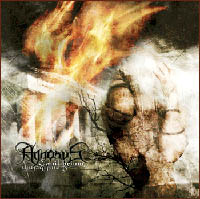
Label : Auto-Production
Sortie du Scud : Ocotbre 2004
Pays : France
Genre : Death Metal varié
Type : MCD
Playtime : 4 Titres - 27 Mins
Agnosys naît des cendres d'Amalek, premier nom du combo mais ne change en rien sa direction musicale en pratiquant une sorte de Death mélodique à la suédoise en y incorporant quelques passages plus atmosphériques ou même progressifs. Le chant est guttural à souhait, les guitares sont savamment dosées entre mélodies et riffs assassins, la basse est bien là... Tous les instruments sonnent au niveau de la production qui pourrait être vraiment bonne si la batterie était notamment mieux représentée sur les parties rapides. Certes, le tout reste beaucoup mieux que leur premier essai, tant par la volonté de faire des morceaux plus aboutis que par le fait de travailler son image et le produit fini. On sent parfaitement que le groupe a poussé la recherche et travaillé ses morceaux car en plus d'être technique et de mélanger les genres, il reste néanmoins accessible et ne tombe pas dans la démonstration.
Agnosys nous offre donc un court aperçu de leur potentiel qui ne demande qu'à s'exprimer. Je lance donc un appel aux décideurs des labels, prenez le temps d'écouter et d'accorder vos faveurs à ce groupe de p'tits parisiens qui n'en veulent.
Ajouté : Jeudi 09 Décembre 2004
Chroniqueur : Blasphy De Blasphèmar
Score :  
Lien en relation: Agnosys Website
Hits: 21473
|


 | © Metal-Impact Since 2001 | Webmaster et Rédacteur en chef : Blasphy De Blasphèmar
 Rechercher sur M-I