Rechercher sur M-I
 |
|
|
|
|
Book Reviews Aléatoires |
|
|
|
|
Interviews Aléatoires |
|
|
|
|
CD Reviews Aléatoires |
|
|
|
|
Rejoins-nous sur Facebook |
|
|
|
|
Live Reports Aléatoires |
|
|
|
|
DVD Reviews Aléatoires |
|
|
|
|
Qui est en Ligne ? |
Il y a actuellement 5412 invités et 0 membres en ligne
Vous êtes un visiteur anonyme. Inscrivez-vous gratuitement en cliquant ici.
|
|
|
M-I Jeux |
|
Deviens un pro de la batterie en cliquant ici ou là (Entraîne toi sur la batterie de Danny Carey de TOOL)
|
|
|
P
U
B |
 |
P
U
B |
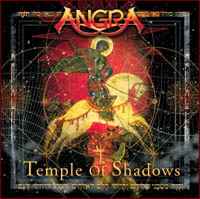
ANGRA (br) - Temple Of Shadows (2004)
Label : Replica Records / Nocturne
Sortie du Scud : 15 novembre 2004
Pays : Brésil
Genre : Speed Métal Mélodique
Type : Album
Playtime : 13 Titres - 67 Mins
Si Rebirth, premier opus d’Angra dans son nouveau line-up, était déjà un excellent album, c’est bien Temple of Shadows qui marque la véritable renaissance du célèbre groupe brésilien de Speed Métal Mélodique.
Déjà, la pochette contraste avec les précédentes, beaucoup plus sombre à l’image de l’album lui-même, qui se révèle également plus Heavy. Dès la première écoute, on est frappé par la remarquable unicité de l’album et son indéniable richesse musicale. Aucun titre faible, chaque morceau apporte sa petite (ou grande) originalité.
Les premiers titres, « Deus Le Volt » et « Spread Your Fire », surpassent la killer intro qu’était pourtant « In Excelsis - Nova Era ». Le morceau le plus marquant est très certainement « The Shadow Hunter », avec sa superbe intro flamenco, ses riffs puissants et un passage très progressif rappelant du « Spock’s Beard ». On notera également « Winds of Destination », elle aussi fortement teintée de progressif, et l’efficace « Temple of Hate », auxquelles la touche, respectivement, de Hansi Kürsh et Kai Hansen donne toute son agressivité. Je citerai encore les belles balades « Wishing Well » –peut-être le titre le plus proche des précédents albums d’Angra et dont les harmonies rappellent fortement Holy Land– et surtout la superbe « No Pain for the Dead » aux voix très travaillées. Le duo Edu Falaschi/Sabine Edelsbacher donne à ce morceau une grande puissance émotionnelle.
En se penchant sur les paroles, on se rend vite compte que les titres ne se présentent pas dans l’ordre de l’histoire –puisqu’il s’agit d’un concept album– mais que leur succession a été définie dans le but évident d’assurer la cohérence musicale de l’album, alternant morceaux rapides et plus lents, violence et émotion. Il s’agit donc de l’histoire d’un croisé, le Shadow Hunter, à qui un rabbin a prédit qu’il était l’élu choisi par Dieu pour guider le peuple. Il s’installe à Jérusalem où il épouse une musulmane qui lui donnera deux fils. Plusieurs années passent au cours desquelles il a fréquemment des révélations mais il ne sait pas s’il doit partager ce savoir. En 1099, sa famille est tuée lors de l’attaque de Jérusalem ; lui-même est blessé et perd connaissance. A son réveil, il comprend le sens de la prophétie et commence à réunir le peuple autour de lui et à l’instruire. L’Église, se sentant menacée, l’arrête et le condamne à mort mais son héritage perdure. Au-delà de l’histoire, il s’agit d’une réflexion sur l’intolérance, l’éducation et l’influence de la religion sur nos cultures.
Si Rebirth visait à rassurer les fans et paraissait donc un peu contraint, on sent bien qu’ici, chaque « nouveau » membre a pu exprimer pleinement sa personnalité et ses influences. Le style d’Edu Falaschi, notamment, s’est nettement affirmé. S’il est très différent de celui de leur ancien chanteur, il n’a définitivement rien à lui envier et sa voix puissante sert parfaitement les compositions du groupe. Quant à Kiko Loureiro, il est au sommet de sa forme et nous sert quelques solos de guitare mémorables.
Un véritable chef-d’œuvre à la mesure du génial Angels Cry.
Ajouté : Mercredi 27 Octobre 2004
Chroniqueur : Kandra
Score : 
Lien en relation: Angra Website
Hits: 42879
|
|
[ Réagissez sur le Forum ] [ Retour à l'index des CD Reviews ]
|
Transmis par Anonyme actif 26 Fév 2005 @ 13:51
Mon score :
magnifique tout simplement. Je ne dirai pas que c'est le meilleur car les 3 premiers sont quand même excellent, ça dépend de votre humeur. Celui-là c'est pour quand vous êtes agressif. Toutes les music sont géniales, à écouter en boucle pour apprécier pleinement. |
Transmis par Anonyme actif 09 Fév 2005 @ 13:17
Mon score :  
Un tres tres tres bon album d'angra, mais je toruve que rebirth est tout de meme un peu mieux
Mais dans cet album, entre les melodies majestueuses et les riffs et autres soli guitares, on trouve forcement son bonheur |
Transmis par Anonyme actif 20 Déc 2004 @ 06:37
Mon score :
VAUM TUDO PRA PUTA Q PARIU SEUS GRINGO, ANGRA EH A MELHOR BANDA E TAH ACABADO
TAUM DANDO NOTA BAXA PQ N CONSEGUIRAM ENTENDER O Q O MILTON NASCIMENTO CANTA EM LATE REDEMPTION SUAS BICHA |
Transmis par Anonyme actif 14 Déc 2004 @ 19:03
Mon score :
Le pauvre gars c'est moi, et je confirme que j'aime pas cet album, c'est pas bon, on est pas loin de la mièvrerie là !!! pas glorieux, pour les fans c'est sur !!! |
Transmis par Anonyme actif 06 Déc 2004 @ 18:43
Mon score :
Melhor banda que já existiu!!!!!!!!!!!!!!!!! |
Transmis par Anonyme actif 04 Déc 2004 @ 14:16
Mon score :
Uma das Melhores Bandas do Mundo é Brasileira, e esse novo CD é um Classico do Heay Metal mundial |
Transmis par Anonyme actif 04 Déc 2004 @ 05:13
Mon score :
Le pauvre gars qui met une mauvaise critique du bas de cette page avec sa mauvaise fois. Pfffffffffft !!! Faut te réveiller mon gars, ouvre tes ouies !!!
Cet album déchire et c'est de loin le meilleur album et le plus développé qu'Angra ait produit. Nous retrouvons là un groupe fort et solidaire.
A février pour la tournée ! Au fait, j'ai vu un nouveau site offciel français pour Angra !!!
Viva Angra ! Viva Brasil !! |
Transmis par Anonyme actif 04 Déc 2004 @ 05:07
Mon score :
Une MERVEILLE :-) |
Transmis par Anonyme actif 04 Déc 2004 @ 00:14
Mon score :
Angra rules!!!! |
Transmis par Anonyme actif 02 Déc 2004 @ 22:29
Mon score :
Im brazilian , so Angra is the best Metal of Brazil with Shaman!!! _|,,| |
Transmis par Anonyme actif 29 Nov 2004 @ 10:56
Mon score :
J'avoue qu'il est moins facile d'accès que les précédents. Il s'adresse donc à des adeptes du speed mélodique pur et dur. Je ne me suis vraiment mis à découvrir tout son potentiel qu'à la 3 ou 4è écoute, mais si l'on prête attention à la voix bien plus agressive d'Edu Falaschi, on découvre un album complètement génial. Je ne parle même pas de la musique, qui n'a jamais atteint un tel sommet. aucun titre n'a été baclé et c'est un vrai bonheur de pouvoir écouter des albums "100%", surtout par les temps qui courent. Excellente continuation pour le groupe, dont je reste un fan inconditionnel. |
Transmis par Kandra actif 24 Nov 2004 @ 17:08
Mon score :
En effet, certaines personnes ne se sont malheureusement jamais remises du split et du départ d'André Matos, pour ne citer que lui. Dommage... |
Transmis par Anonyme actif 05 Nov 2004 @ 17:17
Mon score :
Pas terrible, on fait des éloges de cet album alors que bof.....je regrette d'avoir acheter cela, déjà Au Festival de Raismes leur prestation était de bien piètre qualité, bref Angra c'est fini pour moi. |
|


 | © Metal-Impact Since 2001 | Webmaster et Rédacteur en chef : Blasphy De Blasphèmar