# Copyright (C) 2002-2004 gregoire HUBERT.
#
# This library is free software; you can redistribute it and/or
# modify it under the terms of the GNU Lesser General Public
# License as published by the Free Software Foundation; either
# version 2.1 of the License, or (at your option) any later version.
#
# This library is distributed in the hope that it will be useful,
# but WITHOUT ANY WARRANTY; without even the implied warranty of
# MERCHANTABILITY or FITNESS FOR A PARTICULAR PURPOSE. See the GNU
# Lesser General Public License for more details.
#
# You should have received a copy of the GNU Lesser General Public
# License along with this library; if not, write to the Free Software
# Foundation, Inc., 59 Temple Place, Suite 330, Boston, MA 02111-1307 USA
#
# Author : gregoire HUBERT
#
# XML_node.objet
#
# This object is an XML node representation
#
# /- name (string)
# xml_node --- attributes (array)
# \- children (array) or value (string)
class xml_node {
var $name;
var $attributes = array();
var $children = array();
var $value = "";
function xml_node($name,$attributes,$children=array(),$value="") {
$this->name = $name;
if (is_array($attributes)) {
$this->attributes = $attributes;
}
$this->children = $children;
$this->value = $value;
}
}
# Copyright (C) 2003-2004 gregoire HUBERT.
#
# This library is free software; you can redistribute it and/or
# modify it under the terms of the GNU Lesser General Public
# License as published by the Free Software Foundation; either
# version 2.1 of the License, or (at your option) any later version.
#
# This library is distributed in the hope that it will be useful,
# but WITHOUT ANY WARRANTY; without even the implied warranty of
# MERCHANTABILITY or FITNESS FOR A PARTICULAR PURPOSE. See the GNU
# Lesser General Public License for more details.
#
# You should have received a copy of the GNU Lesser General Public
# License along with this library; if not, write to the Free Software
# Foundation, Inc., 59 Temple Place, Suite 330, Boston, MA 02111-1307 USA
#
# Author : gregoire HUBERT
#
# xml_tree class
#
# This object parses an XML stream and offers a tree composed by xml_nodes
#
class xml_tree {
var $xml_stream;
var $current_node;
var $root_node;
var $index;
var $value;
function xml_tree() {
$this->root_node = new xml_node("__ROOT_NODE",array());
$this->current_node = $this->root_node;
}
function add_tree($xml_stream) {
# Managing the parser
$this->xml_stream = $xml_stream;
$xml_parser = xml_parser_create();
xml_parser_set_option($xml_parser,XML_OPTION_CASE_FOLDING,0);
xml_parser_set_option($xml_parser,XML_OPTION_SKIP_WHITE,1);
if (!xml_parse_into_struct($xml_parser,$this->xml_stream,$this->value,$this->index)) {
xml_parser_free($xml_parser);
die("XML Parse error");
}
xml_parser_free($xml_parser);
# Now, $this->value and $this->index are informed, we can use the get_node methode.
$tab_result = $this->get_node(0,count($this->value) - 1);
$this->root_node->children[] = $tab_result[0];
$this->current_node = $this->root_node;
}
function get_node($index_start,$index_stop) {
#echo " \n";
#echo "GET-NODE($index_start,$index_stop) \n";
# What we are going to return is an array of xml_nodes
$return_tab = array();
# depth is only here to check if everything is all right
$tab_node = $this->value[$index_start];
$depth = $tab_node["level"]-1;
# Now we have to be sure we do not forget a single node
for ($index = $index_start;$index <= $index_stop;$index++) {
#echo "\$index = $index ";
# get the current node
$tab_node = $this->value[$index];
# what type of node is it ?
switch($tab_node["type"]) {
case "complete" :
# Depth integrity check
if ($tab_node["level"] != $depth+1) {
die("ERREUR # contrainte d'intégrité au noeud complet $index, niveau $depth + 1 au lieu de ".$tab_node["level"]);
}
#echo "Noeud complet trouvé position $index TAG ".$tab_node["tag"]." \n";
# Easy one, no children to manage, only a value...
$return_tab[] = new xml_node($tab_node["tag"],$tab_node["attributes"],"",$tab_node["value"]);
break;
case "open" :
# Depth integrity check
if ($tab_node["level"] != $depth +1 ) {
die("ERREUR # contrainte d'intégrité au noeud ouvert $index, niveau $depth au lieu de ".$tab_node["level"]);
}
# Open tag, we re-use this methode to return its children
# Where is the correspondong close tag ?
$node_index = $this->index[$tab_node["tag"]];
$flipped_node_index = array_flip($node_index);
#echo "This ".$tab_node["tag"]." is at coords ".$flipped_node_index[$index]." ";
$i=1;
do {
$next_index = $node_index[$flipped_node_index[$index] + $i++];
$next_tag=$this->value[$next_index];
}
while ($next_tag["level"]!=$tab_node["level"]);
#echo "Ouverture de noeud détectée pos $index TAG ".$tab_node["tag"]." \n Parcours jusqu au $next_index \n";
# good, we can now instanciate our node
$return_tab[] = new xml_node($tab_node["tag"],$tab_node["attributes"],$this->get_node($index+1,$next_index),"");
# As we called the get_node methode, we are sure that nodes have been parsed to the corresponding close tag
$index = $next_index;
break;
case "close" :
# Depth integrity check
if ($tab_node["level"] != $depth ){
die("ERREUR # contrainte d'intégrité au noeud fermé $index, niveau $depth au lieu de ".$tab_node["level"]);
}
#echo "Fermeture de noeud detectée pos $index TAG ".$tab_node["tag"]."
\n";
# This ugly thing is useless because reaching a close tag means that $index==$index_stop but who knows ? =)
# it will be skipped soon
$index = $index_stop;
break;
default:
die("Erreur de type de TAG non déterminé :'".$tab_node["type"]."'");
}
}
# We are out ... returns the array with collected children...
return ($return_tab);
}
# this function browse the xml tree and set the current node to the selected node
function give_node($path) {
if ($path[0]=="/") {
$current_node=$this->root_node;
$path=substr($path,1);
#echo "ABSOLUTE PATH GIVEN=$path ";
}
else {
$current_node = $this->current_node;
}
#echo "PATH GIVEN=$path ";
$tab_path = split("/",$path);
foreach ($tab_path as $node_expr) {
#echo "STUDYING EXPR='$node_expr' ";
$node = $current_node;
$expr_tab = split("\?",$node_expr);
$node_name = $expr_tab[0];
$attr_tab = 0;
if (count($expr_tab)>1) {
##echo "TROUVE AU MOINS UNE CONDITION SUR LES ATTRIBUTS... ";
$attr_expr_tab=split(",",$expr_tab[1]);
$attr_tab=array();
foreach($attr_expr_tab as $attr_expr) {
$attr_split_expr=split("=",$attr_expr);
$attr_tab[$attr_split_expr[0]]=$attr_split_expr[1];
}
}
$last=0;
foreach ($node->children as $children) {
#echo "COMPARING WITH '$children->name' ";
if ($children->name == $node_name) {
##echo "TROUVE NOEUD CORRESPONDANT $node_name ";
if (is_array($attr_tab)) {
$node_attributes = $children->attributes;
foreach ($attr_tab as $key=>$value) {
if ($node_attributes[$key] == $value) {
#echo "ATTRIBUTE & CHANGE CURRENT NODE TO ".$children->name." ";
$current_node = $children;
$last = 1;
}
}
}
else {
##echo "CHILD=".$children->name." ";
#echo "CHANGE CURRENT NODE TO ".$children->name." ";
$current_node = $children;
$last=1;
}
}
if ($last) {
break;
}
}
if (!$last) {
#echo "PATH ERROR $node_name ";
#die("MMmmmh It seems that this file is not a DIA XML format...sorry...");
return 0;
}
}
return $current_node;
}
function browse_tree($path) {
$node = $this->give_node($path);
if (is_object($node)) {
$this->current_node = $node;
return 1;
}
return 0;
}
# this method dumps an html representation of the xml tree
function xml_show($node = "",$level=0,$last=0) {
if ($node=="") {
$node=$this->root_node;
}
if (!is_object($node)) {
die("ERROR : node is not an object");
}
$line="";
for($i=1;$i<=$level;$i++) {
if ((i==$level-1) and ($last)) {
$line.=" ";
}
else {
$line.=" |";
}
if ($i==$level) {
$line.="`-";
}
}
$line.=$node->name;
#echo $line;
$line.="".count($node->children)."";
if (count($node->children)==1) {
$line.=" (".$node->value.") \n";
echo "$line";
}
else {
$line.=" \n";
echo "$line";
$i=1;
foreach($node->children as $children) {
if ($i==count($node->children)) {
$this->xml_show($children,$level+1,1);
}
else {
$this->xml_show($children,$level+1);
}
$i++;
}
}
}
#END_CLASS
}
ARKONA (ru) - Goi, Rode, Goi! (2009)
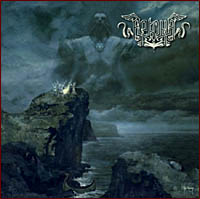
Label : Napalm Records / Season of Mist
Sortie du Scud : 30 octobre 2009
Pays : Russie
Genre : Pagan Folk Metal
Type : Album
Playtime : 14 Titres - 79 Mins
ARKONA est un groupe de Pagan Folk Metal qui nous vient de Russie. J’en vois beaucoup qui sont comme je l’étais encore il y a quelques jours à ne pas connaître ce groupe et à se dire qu’il surfe sur la vague de ce style qui occupe de plus en plus de place. Eh bien que nenni. ARKONA existe depuis 2002 et Goi, Rode, Goi! est leur cinquième album, déjà. Bon, comme on le sait, longévité ne veut pas forcément dire qualité, mais dans le cas d’ARKONA la qualité est bien au rendez-vous. Et vous allez partir pour près d’une heure vingt d’une musique entrainante, envoutante et aussi violente. Le groupe arrive très bien à intégrer les passages folkloriques dans les parties de Metal extrême, mais il change aussi d’ambiance parfois totalement Folk à d’autres totalement Metal sans heurt, et cela passe comme un petit dernier jeté au bistrot du coin. Cette facilité et la cohérence qui en découle vient sans doute du fait que c’est Masha, la chanteuse, qui est à l’origine de presque toutes les compositions. Alors, on peut parfois avoir l’impression d’écouter des parties qui se ressemblent beaucoup, c’est certain, mais la cohésion de l’ensemble fait qu’on passe vite à côté de ce petit défaut.
Goi, Rode, Goi! débute avec… « Goi, Rode, Goi ! ». Ce morceau est parfait pour une entrée en matière. Violent comme il se doit, très entrainant pourtant, les éléments Folk sont clairement mis en avant et le Metal ne semble être qu’un support. On sait, en écoutant par exemple « Tropoiu Nevedannoi », que le Metal n’est pas qu’un simple instrument dans la musique d’ARKONA mais bien un élément majeur. Le groupe choisit par contre d’utiliser plus l’un ou l’autre en fonction des ambiances qu’ils veulent véhiculer à tel ou tel moment. Le chant russe nous donne l’impression de nous envoler pour les étendues slaves, tout en restant bien au chaud chez nous. La voix de Masha, quand elle chante en voix claire, est chaude, profonde et puissante. Elle possède un timbre assez grave, même si elle démontre qu’elle est capable de monter plus dans les aigus (« Na Moey Zemle »). Elle possède un certain vibrato qui augmente encore l’attrait de sa voix. Sa version Death n’est pas en reste, même si elle est moins puissante. Mais le passage de l’une à l’autre voix se fait très naturellement. ARKONA va se permettre aussi un morceau d’un peu plus de quinze minutes, « Na Moey Zemle ». Cela permet de grandement varier les ambiances dans le même morceau, morceau qui va accueillir pléthore d’invités venus d’autres groupes qui officient dans le même genre (MENHIR, HEIDEVOLK…). La contrepartie est qu’on se retrouve parfois à se demander si on n’a pas changé de morceau, les parties n’ayant pas forcément de liens entre elles. Après, comme tout long effort, il faut pénétrer dedans maintes fois pour s’en imprégner. Le début et la fin de l’album sont plus gais dans les émotions que dégagent les titres (outre la profonde mélancolie dégagée par « Nebo Hmuroe, Tuchi Mrachniye ») en opposition au milieu qui lui est vraiment sombre et grave. Du coup, on n’a pas l’impression d’écouter toujours une version autre du même thème même si, comme je le disais plus haut, des consonances se retrouvent inévitablement d’un morceau à l’autre.
ARKONA est pour moi une véritable bonne surprise dans le genre. Un groupe à côté duquel on ne peut passer quand on apprécie ce mélange musical.
Ajouté : Vendredi 28 Mai 2010 Chroniqueur : Wong Li Score :     Lien en relation: Arkona Website Hits: 13500
|