# Copyright (C) 2002-2004 gregoire HUBERT.
#
# This library is free software; you can redistribute it and/or
# modify it under the terms of the GNU Lesser General Public
# License as published by the Free Software Foundation; either
# version 2.1 of the License, or (at your option) any later version.
#
# This library is distributed in the hope that it will be useful,
# but WITHOUT ANY WARRANTY; without even the implied warranty of
# MERCHANTABILITY or FITNESS FOR A PARTICULAR PURPOSE. See the GNU
# Lesser General Public License for more details.
#
# You should have received a copy of the GNU Lesser General Public
# License along with this library; if not, write to the Free Software
# Foundation, Inc., 59 Temple Place, Suite 330, Boston, MA 02111-1307 USA
#
# Author : gregoire HUBERT
#
# XML_node.objet
#
# This object is an XML node representation
#
# /- name (string)
# xml_node --- attributes (array)
# \- children (array) or value (string)
class xml_node {
var $name;
var $attributes = array();
var $children = array();
var $value = "";
function xml_node($name,$attributes,$children=array(),$value="") {
$this->name = $name;
if (is_array($attributes)) {
$this->attributes = $attributes;
}
$this->children = $children;
$this->value = $value;
}
}
# Copyright (C) 2003-2004 gregoire HUBERT.
#
# This library is free software; you can redistribute it and/or
# modify it under the terms of the GNU Lesser General Public
# License as published by the Free Software Foundation; either
# version 2.1 of the License, or (at your option) any later version.
#
# This library is distributed in the hope that it will be useful,
# but WITHOUT ANY WARRANTY; without even the implied warranty of
# MERCHANTABILITY or FITNESS FOR A PARTICULAR PURPOSE. See the GNU
# Lesser General Public License for more details.
#
# You should have received a copy of the GNU Lesser General Public
# License along with this library; if not, write to the Free Software
# Foundation, Inc., 59 Temple Place, Suite 330, Boston, MA 02111-1307 USA
#
# Author : gregoire HUBERT
#
# xml_tree class
#
# This object parses an XML stream and offers a tree composed by xml_nodes
#
class xml_tree {
var $xml_stream;
var $current_node;
var $root_node;
var $index;
var $value;
function xml_tree() {
$this->root_node = new xml_node("__ROOT_NODE",array());
$this->current_node = $this->root_node;
}
function add_tree($xml_stream) {
# Managing the parser
$this->xml_stream = $xml_stream;
$xml_parser = xml_parser_create();
xml_parser_set_option($xml_parser,XML_OPTION_CASE_FOLDING,0);
xml_parser_set_option($xml_parser,XML_OPTION_SKIP_WHITE,1);
if (!xml_parse_into_struct($xml_parser,$this->xml_stream,$this->value,$this->index)) {
xml_parser_free($xml_parser);
die("XML Parse error");
}
xml_parser_free($xml_parser);
# Now, $this->value and $this->index are informed, we can use the get_node methode.
$tab_result = $this->get_node(0,count($this->value) - 1);
$this->root_node->children[] = $tab_result[0];
$this->current_node = $this->root_node;
}
function get_node($index_start,$index_stop) {
#echo " \n";
#echo "GET-NODE($index_start,$index_stop) \n";
# What we are going to return is an array of xml_nodes
$return_tab = array();
# depth is only here to check if everything is all right
$tab_node = $this->value[$index_start];
$depth = $tab_node["level"]-1;
# Now we have to be sure we do not forget a single node
for ($index = $index_start;$index <= $index_stop;$index++) {
#echo "\$index = $index ";
# get the current node
$tab_node = $this->value[$index];
# what type of node is it ?
switch($tab_node["type"]) {
case "complete" :
# Depth integrity check
if ($tab_node["level"] != $depth+1) {
die("ERREUR # contrainte d'intégrité au noeud complet $index, niveau $depth + 1 au lieu de ".$tab_node["level"]);
}
#echo "Noeud complet trouvé position $index TAG ".$tab_node["tag"]." \n";
# Easy one, no children to manage, only a value...
$return_tab[] = new xml_node($tab_node["tag"],$tab_node["attributes"],"",$tab_node["value"]);
break;
case "open" :
# Depth integrity check
if ($tab_node["level"] != $depth +1 ) {
die("ERREUR # contrainte d'intégrité au noeud ouvert $index, niveau $depth au lieu de ".$tab_node["level"]);
}
# Open tag, we re-use this methode to return its children
# Where is the correspondong close tag ?
$node_index = $this->index[$tab_node["tag"]];
$flipped_node_index = array_flip($node_index);
#echo "This ".$tab_node["tag"]." is at coords ".$flipped_node_index[$index]." ";
$i=1;
do {
$next_index = $node_index[$flipped_node_index[$index] + $i++];
$next_tag=$this->value[$next_index];
}
while ($next_tag["level"]!=$tab_node["level"]);
#echo "Ouverture de noeud détectée pos $index TAG ".$tab_node["tag"]." \n Parcours jusqu au $next_index \n";
# good, we can now instanciate our node
$return_tab[] = new xml_node($tab_node["tag"],$tab_node["attributes"],$this->get_node($index+1,$next_index),"");
# As we called the get_node methode, we are sure that nodes have been parsed to the corresponding close tag
$index = $next_index;
break;
case "close" :
# Depth integrity check
if ($tab_node["level"] != $depth ){
die("ERREUR # contrainte d'intégrité au noeud fermé $index, niveau $depth au lieu de ".$tab_node["level"]);
}
#echo "Fermeture de noeud detectée pos $index TAG ".$tab_node["tag"]."
\n";
# This ugly thing is useless because reaching a close tag means that $index==$index_stop but who knows ? =)
# it will be skipped soon
$index = $index_stop;
break;
default:
die("Erreur de type de TAG non déterminé :'".$tab_node["type"]."'");
}
}
# We are out ... returns the array with collected children...
return ($return_tab);
}
# this function browse the xml tree and set the current node to the selected node
function give_node($path) {
if ($path[0]=="/") {
$current_node=$this->root_node;
$path=substr($path,1);
#echo "ABSOLUTE PATH GIVEN=$path ";
}
else {
$current_node = $this->current_node;
}
#echo "PATH GIVEN=$path ";
$tab_path = split("/",$path);
foreach ($tab_path as $node_expr) {
#echo "STUDYING EXPR='$node_expr' ";
$node = $current_node;
$expr_tab = split("\?",$node_expr);
$node_name = $expr_tab[0];
$attr_tab = 0;
if (count($expr_tab)>1) {
##echo "TROUVE AU MOINS UNE CONDITION SUR LES ATTRIBUTS... ";
$attr_expr_tab=split(",",$expr_tab[1]);
$attr_tab=array();
foreach($attr_expr_tab as $attr_expr) {
$attr_split_expr=split("=",$attr_expr);
$attr_tab[$attr_split_expr[0]]=$attr_split_expr[1];
}
}
$last=0;
foreach ($node->children as $children) {
#echo "COMPARING WITH '$children->name' ";
if ($children->name == $node_name) {
##echo "TROUVE NOEUD CORRESPONDANT $node_name ";
if (is_array($attr_tab)) {
$node_attributes = $children->attributes;
foreach ($attr_tab as $key=>$value) {
if ($node_attributes[$key] == $value) {
#echo "ATTRIBUTE & CHANGE CURRENT NODE TO ".$children->name." ";
$current_node = $children;
$last = 1;
}
}
}
else {
##echo "CHILD=".$children->name." ";
#echo "CHANGE CURRENT NODE TO ".$children->name." ";
$current_node = $children;
$last=1;
}
}
if ($last) {
break;
}
}
if (!$last) {
#echo "PATH ERROR $node_name ";
#die("MMmmmh It seems that this file is not a DIA XML format...sorry...");
return 0;
}
}
return $current_node;
}
function browse_tree($path) {
$node = $this->give_node($path);
if (is_object($node)) {
$this->current_node = $node;
return 1;
}
return 0;
}
# this method dumps an html representation of the xml tree
function xml_show($node = "",$level=0,$last=0) {
if ($node=="") {
$node=$this->root_node;
}
if (!is_object($node)) {
die("ERROR : node is not an object");
}
$line="";
for($i=1;$i<=$level;$i++) {
if ((i==$level-1) and ($last)) {
$line.=" ";
}
else {
$line.=" |";
}
if ($i==$level) {
$line.="`-";
}
}
$line.=$node->name;
#echo $line;
$line.="".count($node->children)."";
if (count($node->children)==1) {
$line.=" (".$node->value.") \n";
echo "$line";
}
else {
$line.=" \n";
echo "$line";
$i=1;
foreach($node->children as $children) {
if ($i==count($node->children)) {
$this->xml_show($children,$level+1,1);
}
else {
$this->xml_show($children,$level+1);
}
$i++;
}
}
}
#END_CLASS
}
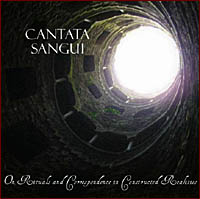
CANTATA SANGUI (fi) - On Rituals And Correspondence In Constructed Realities (2009)
Label : Season Of Mist
Sortie du Scud : 26 janvier 2009
Pays : Finlande
Genre : Gothic / Doom Metal avant-gardiste
Type : Album
Playtime : 12 Titres - 46 Mins
Il existe comme ça, au détour d’un chapitre de Lovecraft, des groupes au raffinement et à la classe remarquable. Le genre à vous faire boire un vin empoisonné dans un verre en cristal. Le genre à sortir l’argenterie de luxe et les chandelles pour un dîner de funérailles. Le genre également, à convier la faucheuse à venir prendre un thé et des biscuits dans un fauteuil en satin. CANTATA SANGUI en fait partie. Leur premier jet, On Rituals And Correspondance In Constructed Realities, après une fournée de quatre démos, nous est livré dans un écrin de nacre par les soins de Season Of Mist. Le moins que l’on puisse dire, c’est que cette sortie a été travaillée et affinée à l’extrême. De la cover aux réalisations, tout semble réglé comme du papier à musique. Aucune anicroche ne viendra perturber le bon déroulement de cette messe.
Les finlandais étalent tout au long de ce disque, une palette d’inspiration éblouissante. Eclat devient assez vite le maître mot de l’affaire. Entre « We’ll Have It On Us », « Sidecast » et « No Longer In The Eyes Of Aletheia », nous sommes assaillis de rafales mélodique et d’ambiances spirituelles de bon ton. Le concept du full-lenght tourne d’ailleurs autour du mysticisme, de la psychologie, des sciences naturelles, de la philosophie et plus généralement, de la glorification du Je. Ainsi, entendre une proposition de quatre minutes (« De Profundis ») sous forme de chœurs grégoriens ne choquera personne. Cependant, au fur et à mesure que les secondes s’égrènent, il y’a un fait inexplicable qui change radicalement le son de CANTATA SANGUI. Pas moyen de s’ôter cette idée de la tête, il y’a quelque chose de vicieux et de pas catholique dans cette musique. Une recherche approfondie sur les intentions du combo viendra à ma rescousse. Les nordiques n’utilisent à aucun moment de guitare, préférant l’usage de deux basses ! L’effet est absolument hors du commun et on redécouvre grâce à nos amis que la basse est définitivement trop mise en retrait dans les autres formations. Tuomas et Mika, les deux bassistes s’accordent parfaitement et harmonisent avec respect les vocaux d’Anna Pienimaki. Cette dernière possède un timbre tout à fait particulier qui confère à la plupart des plages d’On Rituals And Correspondance In Constructed Realities une profondeur abyssale (« Broken Stars »). L’utilisation de quelques growls malins (œuvre de Tuomas) brise la dynamique et offre des compositions riches et variées comme « Exaltata ». L’osmose idyllique entre les compères est le point fort de l’opus. Chacun complète l’autre sans empiéter sur son territoire. De ce fait, CANTATA SANGUI est une chaîne constituée de cinq maillons forts. Et si un élément venait à faillir, nul doute que qu’il va falloir se mettre en quête de la perle rare pour égaler pareille harmonie. Un dernier point sur la partition de la claviériste Hanna Sirola, qui doit avoir un long passé derrière les keyboards pour créer des atmosphères aussi pesantes que réussies. Si vous cherchez un responsable à la notion d’avant-gardisme qui accompagne leur Gothic/Doom Metal, tournez vous vers ce petit bout de femme.
Toujours avec une distinction inégalable, les scandinaves nous ouvrent les portes d’un univers bien particulier, où les murs sont tapissés de sang et de paillettes. Malgré tout, la pièce est plongée dans l’obscurité et seul votre imaginaire vous permettra de vous échapper de cet environnement inquiétant. Et si un ange passe et vous propose une lampée de vin dans un verre en cristal, pensez à le refuser.
Ajouté : Jeudi 19 Mars 2009 Chroniqueur : Stef. Score :     Lien en relation: Cantata Sangui Website Hits: 15657
|