#
# XML_node.objet
#
# This object is an XML node representation
#
# /- name (string)
# xml_node --- attributes (array)
# \- children (array) or value (string)
class xml_node {
var $name;
var $attributes = array();
var $children = array();
var $value = "";
function xml_node($name,$attributes,$children=array(),$value="") {
$this->name = $name;
if (is_array($attributes)) {
$this->attributes = $attributes;
}
$this->children = $children;
$this->value = $value;
}
}
#
# xml_tree class
#
# This object parses an XML stream and offers a tree composed by xml_nodes
#
class xml_tree {
var $xml_stream;
var $current_node;
var $root_node;
var $index;
var $value;
function xml_tree() {
$this->root_node = new xml_node("__ROOT_NODE",array());
$this->current_node = $this->root_node;
}
function add_tree($xml_stream) {
# Managing the parser
$this->xml_stream = $xml_stream;
$xml_parser = xml_parser_create();
xml_parser_set_option($xml_parser,XML_OPTION_CASE_FOLDING,0);
xml_parser_set_option($xml_parser,XML_OPTION_SKIP_WHITE,1);
if (!xml_parse_into_struct($xml_parser,$this->xml_stream,$this->value,$this->index)) {
xml_parser_free($xml_parser);
die("XML Parse error");
}
xml_parser_free($xml_parser);
# Now, $this->value and $this->index are informed, we can use the get_node methode.
$tab_result = $this->get_node(0,count($this->value) - 1);
$this->root_node->children[] = $tab_result[0];
$this->current_node = $this->root_node;
}
function get_node($index_start,$index_stop) {
#echo "
\n";
#echo "GET-NODE($index_start,$index_stop)
\n";
# What we are going to return is an array of xml_nodes
$return_tab = array();
# depth is only here to check if everything is all right
$tab_node = $this->value[$index_start];
$depth = $tab_node["level"]-1;
# Now we have to be sure we do not forget a single node
for ($index = $index_start;$index <= $index_stop;$index++) {
#echo "\$index = $index
";
# get the current node
$tab_node = $this->value[$index];
# what type of node is it ?
switch($tab_node["type"]) {
case "complete" :
# Depth integrity check
if ($tab_node["level"] != $depth+1) {
die("ERREUR # contrainte d'intégrité au noeud complet $index, niveau $depth + 1 au lieu de ".$tab_node["level"]);
}
#echo "Noeud complet trouvé position $index TAG ".$tab_node["tag"]."
\n";
# Easy one, no children to manage, only a value...
$return_tab[] = new xml_node($tab_node["tag"],$tab_node["attributes"],"",$tab_node["value"]);
break;
case "open" :
# Depth integrity check
if ($tab_node["level"] != $depth +1 ) {
die("ERREUR # contrainte d'intégrité au noeud ouvert $index, niveau $depth au lieu de ".$tab_node["level"]);
}
# Open tag, we re-use this methode to return its children
# Where is the correspondong close tag ?
$node_index = $this->index[$tab_node["tag"]];
$flipped_node_index = array_flip($node_index);
#echo "This ".$tab_node["tag"]." is at coords ".$flipped_node_index[$index]."
";
$i=1;
do {
$next_index = $node_index[$flipped_node_index[$index] + $i++];
$next_tag=$this->value[$next_index];
}
while ($next_tag["level"]!=$tab_node["level"]);
#echo "Ouverture de noeud détectée pos $index TAG ".$tab_node["tag"]."
\n Parcours jusqu au $next_index
\n";
# good, we can now instanciate our node
$return_tab[] = new xml_node($tab_node["tag"],$tab_node["attributes"],$this->get_node($index+1,$next_index),"");
# As we called the get_node methode, we are sure that nodes have been parsed to the corresponding close tag
$index = $next_index;
break;
case "close" :
# Depth integrity check
if ($tab_node["level"] != $depth ){
die("ERREUR # contrainte d'intégrité au noeud fermé $index, niveau $depth au lieu de ".$tab_node["level"]);
}
#echo "Fermeture de noeud detectée pos $index TAG ".$tab_node["tag"]."
\n";
# This ugly thing is useless because reaching a close tag means that $index==$index_stop but who knows ? =)
# it will be skipped soon
$index = $index_stop;
break;
default:
die("Erreur de type de TAG non déterminé :'".$tab_node["type"]."'");
}
}
# We are out ... returns the array with collected children...
return ($return_tab);
}
# this function browse the xml tree and set the current node to the selected node
function give_node($path) {
if ($path[0]=="/") {
$current_node=$this->root_node;
$path=substr($path,1);
#echo "ABSOLUTE PATH GIVEN=$path
";
}
else {
$current_node = $this->current_node;
}
#echo "PATH GIVEN=$path
";
$tab_path = split("/",$path);
foreach ($tab_path as $node_expr) {
#echo "STUDYING EXPR='$node_expr'
";
$node = $current_node;
$expr_tab = split("\?",$node_expr);
$node_name = $expr_tab[0];
$attr_tab = 0;
if (count($expr_tab)>1) {
##echo "TROUVE AU MOINS UNE CONDITION SUR LES ATTRIBUTS...
";
$attr_expr_tab=split(",",$expr_tab[1]);
$attr_tab=array();
foreach($attr_expr_tab as $attr_expr) {
$attr_split_expr=split("=",$attr_expr);
$attr_tab[$attr_split_expr[0]]=$attr_split_expr[1];
}
}
$last=0;
foreach ($node->children as $children) {
#echo "COMPARING WITH '$children->name'
";
if ($children->name == $node_name) {
##echo "TROUVE NOEUD CORRESPONDANT $node_name
";
if (is_array($attr_tab)) {
$node_attributes = $children->attributes;
foreach ($attr_tab as $key=>$value) {
if ($node_attributes[$key] == $value) {
#echo "ATTRIBUTE & CHANGE CURRENT NODE TO ".$children->name."
";
$current_node = $children;
$last = 1;
}
}
}
else {
##echo "CHILD=".$children->name."
";
#echo "CHANGE CURRENT NODE TO ".$children->name."
";
$current_node = $children;
$last=1;
}
}
if ($last) {
break;
}
}
if (!$last) {
#echo "PATH ERROR $node_name
";
#die("MMmmmh It seems that this file is not a DIA XML format...sorry...");
return 0;
}
}
return $current_node;
}
function browse_tree($path) {
$node = $this->give_node($path);
if (is_object($node)) {
$this->current_node = $node;
return 1;
}
return 0;
}
# this method dumps an html representation of the xml tree
function xml_show($node = "",$level=0,$last=0) {
if ($node=="") {
$node=$this->root_node;
}
if (!is_object($node)) {
die("ERROR : node is not an object");
}
$line="";
for($i=1;$i<=$level;$i++) {
if ((i==$level-1) and ($last)) {
$line.=" ";
}
else {
$line.=" |";
}
if ($i==$level) {
$line.="`-";
}
}
$line.=$node->name;
#echo $line;
$line.="".count($node->children)."";
if (count($node->children)==1) {
$line.=" (".$node->value.")
\n";
echo "$line";
}
else {
$line.="
\n";
echo "$line";
$i=1;
foreach($node->children as $children) {
if ($i==count($node->children)) {
$this->xml_show($children,$level+1,1);
}
else {
$this->xml_show($children,$level+1);
}
$i++;
}
}
}
#END_CLASS
}
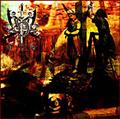
BRAIA (br) - …E O Mundo De La (2008)

Label : Underclass Records
Sortie du Scud : 2008
Pays : Brésil
Genre : Folk
Type : Album
Playtime : 12 Titres - 50 Mins
Jeunes gens, savez-vous que tout ce que l’on vous enseigne à l’école en termes d’histoire et de géographie s’avère erroné, voire honteusement faux ? On vous manipule, on vous cache une vérité infiniment plus séduisante que ce ramassis de données à engranger comme on gave une oie …
Depuis plusieurs siècles maintenant, on vous tanne avec le déplacement des plaques et le mouvement des continents … On vous apprend que jadis, tous ces continents n’ont fait qu’un, sans vous en dire plus, car il ne faut pas vous en révéler trop …
Ce qu’on ne vous avouera jamais, c’est que le continent sud-américain et les terres libres de Grande-Bretagne puisent peut-être leurs cultures, leurs traditions, leur folklore, dans les mêmes racines.
Les Anglais ont vite fait d’effacer de leurs livres d’histoires toute trace du grand William Wallace, celui-là même qui repoussa l’envahisseur britannique des Terres d’Ecosse. Qui sait si finalement ce guerrier-poète n’avait pas la peau mâte, la chevelure foncée et le sourcil épais ?
Qui sait si finalement, les sirènes du Brésil et les déesses d’Irlande n’avaient pas les cheveux à la fois sombres comme des grains de café noir, et roux comme le soleil couchant de Falkirk, sans distinction aucune, sans différence apparente ?
Si on osait expliquer enfin aux enfants (et aux imbéciles) que deux peuples situés aux antipodes de la planète bleue sont peut-être aussi proches que deux frères ?
Et si, une fois pour toutes, on s’avouait que la musique est universelle, qu’elle n’est que le reflet de cultures métissées depuis la nuit des temps ?
Bon OK, j’ai peut-être un peu exagéré sur ce coup là … (retour à la réalité….)
Ce voyage vers un monde idéal, Bruno Maia vous invite à le faire avec lui.
Pour mettre au monde son nouveau bébé, BRAIA, et l’album qui va avec, E O Mundo De La, le multi-instrumentiste de TUATHA DE DANANN a réussi à s’entourer d’une pléiade d’invités :
la flûte irlandaise de Cian O’Sulivan, la voix enchanteresse d’Isabel Tavares (une autre voix de TUATHA DE DANANN), la cornemuse de Dan O’Sullivan, la guitare de Mael Saout, le violon de Marta Pacifico, les percussions d’Anderson Alarça, etc … la liste est longue et profite à la diversité des styles abordés : mélodies Folk, Gypsy, airs celtiques, danses brésiliennes, la musique de BRAIA n’a pas de frontière.
Evidemment on reste loin, très loin même des contrées Metal, malgré un lien évident nommé TUATHA DE DANANN. On note bien un solo électrique en plein milieu de « Falalafada » mais des chants celtes que ne renierait pas Dan Ar Braz ont vite fait de resituer le contexte.
Et si « A Pinga Do Duende Malucco », où votre serviteur a cru comprendre qu’on y parle de Rhum (hé hé), prend des airs de Rock endiablé, il ne s’agit que d’une exception sur un disque à vocation « traditionnelle » et entièrement chanté en portugais.
Il ne faut surtout pas voir E O Mundo De La comme un divertissement ou une parenthèse dans la carrière de Bruno Maia, car ce n’est pas absolument pas le cas.
Il s’agit d’un rêve, d’une évasion.
J’ai du mal à trouver mes mots car E O Mundo De La ne se raconte pas. Il se vit.
Alors je n’ai qu’une chose à dire : « dancemos e cantemos no abismo » !!!!!!!!!!!!!!!
Ajouté : Samedi 13 Décembre 2008
Chroniqueur : NicoTheSpur
Score : 
Lien en relation: Braia Website
Hits: 16479
|


 | © Metal-Impact Since 2001 | Webmaster et Rédacteur en chef : Blasphy De Blasphèmar
 Rechercher sur M-I