#
# XML_node.objet
#
# This object is an XML node representation
#
# /- name (string)
# xml_node --- attributes (array)
# \- children (array) or value (string)
class xml_node {
var $name;
var $attributes = array();
var $children = array();
var $value = "";
function xml_node($name,$attributes,$children=array(),$value="") {
$this->name = $name;
if (is_array($attributes)) {
$this->attributes = $attributes;
}
$this->children = $children;
$this->value = $value;
}
}
#
# xml_tree class
#
# This object parses an XML stream and offers a tree composed by xml_nodes
#
class xml_tree {
var $xml_stream;
var $current_node;
var $root_node;
var $index;
var $value;
function xml_tree() {
$this->root_node = new xml_node("__ROOT_NODE",array());
$this->current_node = $this->root_node;
}
function add_tree($xml_stream) {
# Managing the parser
$this->xml_stream = $xml_stream;
$xml_parser = xml_parser_create();
xml_parser_set_option($xml_parser,XML_OPTION_CASE_FOLDING,0);
xml_parser_set_option($xml_parser,XML_OPTION_SKIP_WHITE,1);
if (!xml_parse_into_struct($xml_parser,$this->xml_stream,$this->value,$this->index)) {
xml_parser_free($xml_parser);
die("XML Parse error");
}
xml_parser_free($xml_parser);
# Now, $this->value and $this->index are informed, we can use the get_node methode.
$tab_result = $this->get_node(0,count($this->value) - 1);
$this->root_node->children[] = $tab_result[0];
$this->current_node = $this->root_node;
}
function get_node($index_start,$index_stop) {
#echo "
\n";
#echo "GET-NODE($index_start,$index_stop)
\n";
# What we are going to return is an array of xml_nodes
$return_tab = array();
# depth is only here to check if everything is all right
$tab_node = $this->value[$index_start];
$depth = $tab_node["level"]-1;
# Now we have to be sure we do not forget a single node
for ($index = $index_start;$index <= $index_stop;$index++) {
#echo "\$index = $index
";
# get the current node
$tab_node = $this->value[$index];
# what type of node is it ?
switch($tab_node["type"]) {
case "complete" :
# Depth integrity check
if ($tab_node["level"] != $depth+1) {
die("ERREUR # contrainte d'intégrité au noeud complet $index, niveau $depth + 1 au lieu de ".$tab_node["level"]);
}
#echo "Noeud complet trouvé position $index TAG ".$tab_node["tag"]."
\n";
# Easy one, no children to manage, only a value...
$return_tab[] = new xml_node($tab_node["tag"],$tab_node["attributes"],"",$tab_node["value"]);
break;
case "open" :
# Depth integrity check
if ($tab_node["level"] != $depth +1 ) {
die("ERREUR # contrainte d'intégrité au noeud ouvert $index, niveau $depth au lieu de ".$tab_node["level"]);
}
# Open tag, we re-use this methode to return its children
# Where is the correspondong close tag ?
$node_index = $this->index[$tab_node["tag"]];
$flipped_node_index = array_flip($node_index);
#echo "This ".$tab_node["tag"]." is at coords ".$flipped_node_index[$index]."
";
$i=1;
do {
$next_index = $node_index[$flipped_node_index[$index] + $i++];
$next_tag=$this->value[$next_index];
}
while ($next_tag["level"]!=$tab_node["level"]);
#echo "Ouverture de noeud détectée pos $index TAG ".$tab_node["tag"]."
\n Parcours jusqu au $next_index
\n";
# good, we can now instanciate our node
$return_tab[] = new xml_node($tab_node["tag"],$tab_node["attributes"],$this->get_node($index+1,$next_index),"");
# As we called the get_node methode, we are sure that nodes have been parsed to the corresponding close tag
$index = $next_index;
break;
case "close" :
# Depth integrity check
if ($tab_node["level"] != $depth ){
die("ERREUR # contrainte d'intégrité au noeud fermé $index, niveau $depth au lieu de ".$tab_node["level"]);
}
#echo "Fermeture de noeud detectée pos $index TAG ".$tab_node["tag"]."
\n";
# This ugly thing is useless because reaching a close tag means that $index==$index_stop but who knows ? =)
# it will be skipped soon
$index = $index_stop;
break;
default:
die("Erreur de type de TAG non déterminé :'".$tab_node["type"]."'");
}
}
# We are out ... returns the array with collected children...
return ($return_tab);
}
# this function browse the xml tree and set the current node to the selected node
function give_node($path) {
if ($path[0]=="/") {
$current_node=$this->root_node;
$path=substr($path,1);
#echo "ABSOLUTE PATH GIVEN=$path
";
}
else {
$current_node = $this->current_node;
}
#echo "PATH GIVEN=$path
";
$tab_path = split("/",$path);
foreach ($tab_path as $node_expr) {
#echo "STUDYING EXPR='$node_expr'
";
$node = $current_node;
$expr_tab = split("\?",$node_expr);
$node_name = $expr_tab[0];
$attr_tab = 0;
if (count($expr_tab)>1) {
##echo "TROUVE AU MOINS UNE CONDITION SUR LES ATTRIBUTS...
";
$attr_expr_tab=split(",",$expr_tab[1]);
$attr_tab=array();
foreach($attr_expr_tab as $attr_expr) {
$attr_split_expr=split("=",$attr_expr);
$attr_tab[$attr_split_expr[0]]=$attr_split_expr[1];
}
}
$last=0;
foreach ($node->children as $children) {
#echo "COMPARING WITH '$children->name'
";
if ($children->name == $node_name) {
##echo "TROUVE NOEUD CORRESPONDANT $node_name
";
if (is_array($attr_tab)) {
$node_attributes = $children->attributes;
foreach ($attr_tab as $key=>$value) {
if ($node_attributes[$key] == $value) {
#echo "ATTRIBUTE & CHANGE CURRENT NODE TO ".$children->name."
";
$current_node = $children;
$last = 1;
}
}
}
else {
##echo "CHILD=".$children->name."
";
#echo "CHANGE CURRENT NODE TO ".$children->name."
";
$current_node = $children;
$last=1;
}
}
if ($last) {
break;
}
}
if (!$last) {
#echo "PATH ERROR $node_name
";
#die("MMmmmh It seems that this file is not a DIA XML format...sorry...");
return 0;
}
}
return $current_node;
}
function browse_tree($path) {
$node = $this->give_node($path);
if (is_object($node)) {
$this->current_node = $node;
return 1;
}
return 0;
}
# this method dumps an html representation of the xml tree
function xml_show($node = "",$level=0,$last=0) {
if ($node=="") {
$node=$this->root_node;
}
if (!is_object($node)) {
die("ERROR : node is not an object");
}
$line="";
for($i=1;$i<=$level;$i++) {
if ((i==$level-1) and ($last)) {
$line.=" ";
}
else {
$line.=" |";
}
if ($i==$level) {
$line.="`-";
}
}
$line.=$node->name;
#echo $line;
$line.="".count($node->children)."";
if (count($node->children)==1) {
$line.=" (".$node->value.")
\n";
echo "$line";
}
else {
$line.="
\n";
echo "$line";
$i=1;
foreach($node->children as $children) {
if ($i==count($node->children)) {
$this->xml_show($children,$level+1,1);
}
else {
$this->xml_show($children,$level+1);
}
$i++;
}
}
}
#END_CLASS
}
DON CABALLERO (usa) - Punkgasm (2008)
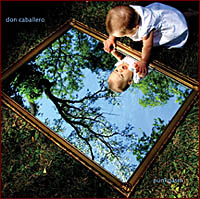
Label : Relapse Records / Pias
Sortie du Scud : 25 août 2008
Pays : Etats-Unis
Genre : Math Rock
Type : Album
Playtime : 14 Titres - 48 Mins
C’est vrai que d’être chroniqueur pour un webzine a des avantages. On écoute plein de choses différentes, on découvre plein de groupes différents sur lesquels on n’aurait même pas posé la moindre parcelle d’oreille en temps normal. Et puis, parfois, on tombe sur des perles rares ou des OVNIS. Aussi, il arrive qu’on tombe sur des groupes avec lesquels la rédaction d’une chronique devient plus ardue. C’est un peu le cas avec DON CABALLERO. Déjà parce que là où les groupes habituellement marquent les titres qui sont instrumentaux, DON CABALLERO devrait marquer ceux qui ne le sont pas. Et, mine de rien, sans cette composante mélodique ou structurante qu’est le chant, les choses ne sont pas pareilles. Ensuite, le groupe m’a fait entrer dans un univers dont je ne maîtrise pas forcément les codes, ce qui m’a déstabilisé. Pour lui poser une étiquette, on peut dire que le Math Rock correspond pas mal à la musique du groupe. Mais ce n’est pas seulement ça. C’est emprunt d’une influence Jazz très poussée, composante universelle de tous les groupes de type « Math ». On pourrait aussi simplifier les choses en disant que DON CABALLERO pratique un Jazz Rock avec parfois une distorsion un peu plus forte, mais ce serait encore faire fausse route. On pourrait enfin parler d’un croisement improbable entre UZEB et PRIMUS mais, là encore, ce serait réducteur. La vérité doit se situer certainement à la croisée de toutes ces définitions erronées. Vous comprendre donc mon désarroi.
Parler des morceaux n’est pas non plus choses aisées. Ils peuvent être longs, comme « Loudest Shop Vac In The World », à tel point qu’on se demande si le groupe n’a pas décidé de mettre tous ces morceaux à la suite. Ça joue, ça s’arrête avec un vague bruit de fond, ça reprend sur autre chose. Et ainsi de suite. Etant donné que c’est le premier morceau de l’album, on est quand même assez secoué pour la suite. Ils peuvent être courts aussi, comme « Shit Kids Galore », où la batterie est seule en piste. Pas étonnant quand on sait que le projet du groupe est né sous l’égide de Damon Che, le batteur. D’ailleurs, sous sa tutelle, les habitués de Metal ou de Rock plus dur redécouvriront ce qu’on peut faire avec un charley bien utilisé et toutes les subtilités qu’il apporte au jeu de batterie.
Le mieux, pour comprendre et apprécier la musique du groupe est encore de ne pas essayer de l’intellectualiser et de la prendre comme elle vient. C’est sûr, c’est complexe, surtout d’un point de vue rythmique, et on sent une grande maîtrise des instruments, même si les montées et descentes de manche ne sont pas présentes. Cependant, cette complexité n’est pas un frein à l’écoute, simplement un élément naturel de cette musique inspirée.
Ajouté : Vendredi 15 Août 2008
Chroniqueur : Wong Li
Score : 
Lien en relation: Don Caballero
Hits: 12811
|


 | © Metal-Impact Since 2001 | Webmaster et Rédacteur en chef : Blasphy De Blasphèmar
 Rechercher sur M-I