# Copyright (C) 2002-2004 gregoire HUBERT.
#
# This library is free software; you can redistribute it and/or
# modify it under the terms of the GNU Lesser General Public
# License as published by the Free Software Foundation; either
# version 2.1 of the License, or (at your option) any later version.
#
# This library is distributed in the hope that it will be useful,
# but WITHOUT ANY WARRANTY; without even the implied warranty of
# MERCHANTABILITY or FITNESS FOR A PARTICULAR PURPOSE. See the GNU
# Lesser General Public License for more details.
#
# You should have received a copy of the GNU Lesser General Public
# License along with this library; if not, write to the Free Software
# Foundation, Inc., 59 Temple Place, Suite 330, Boston, MA 02111-1307 USA
#
# Author : gregoire HUBERT
#
# XML_node.objet
#
# This object is an XML node representation
#
# /- name (string)
# xml_node --- attributes (array)
# \- children (array) or value (string)
class xml_node {
var $name;
var $attributes = array();
var $children = array();
var $value = "";
function xml_node($name,$attributes,$children=array(),$value="") {
$this->name = $name;
if (is_array($attributes)) {
$this->attributes = $attributes;
}
$this->children = $children;
$this->value = $value;
}
}
# Copyright (C) 2003-2004 gregoire HUBERT.
#
# This library is free software; you can redistribute it and/or
# modify it under the terms of the GNU Lesser General Public
# License as published by the Free Software Foundation; either
# version 2.1 of the License, or (at your option) any later version.
#
# This library is distributed in the hope that it will be useful,
# but WITHOUT ANY WARRANTY; without even the implied warranty of
# MERCHANTABILITY or FITNESS FOR A PARTICULAR PURPOSE. See the GNU
# Lesser General Public License for more details.
#
# You should have received a copy of the GNU Lesser General Public
# License along with this library; if not, write to the Free Software
# Foundation, Inc., 59 Temple Place, Suite 330, Boston, MA 02111-1307 USA
#
# Author : gregoire HUBERT
#
# xml_tree class
#
# This object parses an XML stream and offers a tree composed by xml_nodes
#
class xml_tree {
var $xml_stream;
var $current_node;
var $root_node;
var $index;
var $value;
function xml_tree() {
$this->root_node = new xml_node("__ROOT_NODE",array());
$this->current_node = $this->root_node;
}
function add_tree($xml_stream) {
# Managing the parser
$this->xml_stream = $xml_stream;
$xml_parser = xml_parser_create();
xml_parser_set_option($xml_parser,XML_OPTION_CASE_FOLDING,0);
xml_parser_set_option($xml_parser,XML_OPTION_SKIP_WHITE,1);
if (!xml_parse_into_struct($xml_parser,$this->xml_stream,$this->value,$this->index)) {
xml_parser_free($xml_parser);
die("XML Parse error");
}
xml_parser_free($xml_parser);
# Now, $this->value and $this->index are informed, we can use the get_node methode.
$tab_result = $this->get_node(0,count($this->value) - 1);
$this->root_node->children[] = $tab_result[0];
$this->current_node = $this->root_node;
}
function get_node($index_start,$index_stop) {
#echo " \n";
#echo "GET-NODE($index_start,$index_stop) \n";
# What we are going to return is an array of xml_nodes
$return_tab = array();
# depth is only here to check if everything is all right
$tab_node = $this->value[$index_start];
$depth = $tab_node["level"]-1;
# Now we have to be sure we do not forget a single node
for ($index = $index_start;$index <= $index_stop;$index++) {
#echo "\$index = $index ";
# get the current node
$tab_node = $this->value[$index];
# what type of node is it ?
switch($tab_node["type"]) {
case "complete" :
# Depth integrity check
if ($tab_node["level"] != $depth+1) {
die("ERREUR # contrainte d'intégrité au noeud complet $index, niveau $depth + 1 au lieu de ".$tab_node["level"]);
}
#echo "Noeud complet trouvé position $index TAG ".$tab_node["tag"]." \n";
# Easy one, no children to manage, only a value...
$return_tab[] = new xml_node($tab_node["tag"],$tab_node["attributes"],"",$tab_node["value"]);
break;
case "open" :
# Depth integrity check
if ($tab_node["level"] != $depth +1 ) {
die("ERREUR # contrainte d'intégrité au noeud ouvert $index, niveau $depth au lieu de ".$tab_node["level"]);
}
# Open tag, we re-use this methode to return its children
# Where is the correspondong close tag ?
$node_index = $this->index[$tab_node["tag"]];
$flipped_node_index = array_flip($node_index);
#echo "This ".$tab_node["tag"]." is at coords ".$flipped_node_index[$index]." ";
$i=1;
do {
$next_index = $node_index[$flipped_node_index[$index] + $i++];
$next_tag=$this->value[$next_index];
}
while ($next_tag["level"]!=$tab_node["level"]);
#echo "Ouverture de noeud détectée pos $index TAG ".$tab_node["tag"]." \n Parcours jusqu au $next_index \n";
# good, we can now instanciate our node
$return_tab[] = new xml_node($tab_node["tag"],$tab_node["attributes"],$this->get_node($index+1,$next_index),"");
# As we called the get_node methode, we are sure that nodes have been parsed to the corresponding close tag
$index = $next_index;
break;
case "close" :
# Depth integrity check
if ($tab_node["level"] != $depth ){
die("ERREUR # contrainte d'intégrité au noeud fermé $index, niveau $depth au lieu de ".$tab_node["level"]);
}
#echo "Fermeture de noeud detectée pos $index TAG ".$tab_node["tag"]."
\n";
# This ugly thing is useless because reaching a close tag means that $index==$index_stop but who knows ? =)
# it will be skipped soon
$index = $index_stop;
break;
default:
die("Erreur de type de TAG non déterminé :'".$tab_node["type"]."'");
}
}
# We are out ... returns the array with collected children...
return ($return_tab);
}
# this function browse the xml tree and set the current node to the selected node
function give_node($path) {
if ($path[0]=="/") {
$current_node=$this->root_node;
$path=substr($path,1);
#echo "ABSOLUTE PATH GIVEN=$path ";
}
else {
$current_node = $this->current_node;
}
#echo "PATH GIVEN=$path ";
$tab_path = split("/",$path);
foreach ($tab_path as $node_expr) {
#echo "STUDYING EXPR='$node_expr' ";
$node = $current_node;
$expr_tab = split("\?",$node_expr);
$node_name = $expr_tab[0];
$attr_tab = 0;
if (count($expr_tab)>1) {
##echo "TROUVE AU MOINS UNE CONDITION SUR LES ATTRIBUTS... ";
$attr_expr_tab=split(",",$expr_tab[1]);
$attr_tab=array();
foreach($attr_expr_tab as $attr_expr) {
$attr_split_expr=split("=",$attr_expr);
$attr_tab[$attr_split_expr[0]]=$attr_split_expr[1];
}
}
$last=0;
foreach ($node->children as $children) {
#echo "COMPARING WITH '$children->name' ";
if ($children->name == $node_name) {
##echo "TROUVE NOEUD CORRESPONDANT $node_name ";
if (is_array($attr_tab)) {
$node_attributes = $children->attributes;
foreach ($attr_tab as $key=>$value) {
if ($node_attributes[$key] == $value) {
#echo "ATTRIBUTE & CHANGE CURRENT NODE TO ".$children->name." ";
$current_node = $children;
$last = 1;
}
}
}
else {
##echo "CHILD=".$children->name." ";
#echo "CHANGE CURRENT NODE TO ".$children->name." ";
$current_node = $children;
$last=1;
}
}
if ($last) {
break;
}
}
if (!$last) {
#echo "PATH ERROR $node_name ";
#die("MMmmmh It seems that this file is not a DIA XML format...sorry...");
return 0;
}
}
return $current_node;
}
function browse_tree($path) {
$node = $this->give_node($path);
if (is_object($node)) {
$this->current_node = $node;
return 1;
}
return 0;
}
# this method dumps an html representation of the xml tree
function xml_show($node = "",$level=0,$last=0) {
if ($node=="") {
$node=$this->root_node;
}
if (!is_object($node)) {
die("ERROR : node is not an object");
}
$line="";
for($i=1;$i<=$level;$i++) {
if ((i==$level-1) and ($last)) {
$line.=" ";
}
else {
$line.=" |";
}
if ($i==$level) {
$line.="`-";
}
}
$line.=$node->name;
#echo $line;
$line.="".count($node->children)."";
if (count($node->children)==1) {
$line.=" (".$node->value.") \n";
echo "$line";
}
else {
$line.=" \n";
echo "$line";
$i=1;
foreach($node->children as $children) {
if ($i==count($node->children)) {
$this->xml_show($children,$level+1,1);
}
else {
$this->xml_show($children,$level+1);
}
$i++;
}
}
}
#END_CLASS
}
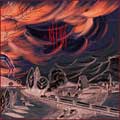
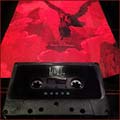
HELLSAW (at) - Trist (2012)

Label : Napalm Records
Sortie du Scud : 24 février 2012
Pays : Autriche
Genre : Black Metal
Type : Album
Playtime : 9 Titres - 43 Mins
Après Cold, voici Trist. Et c'est déjà une information suffisante pour comprendre que ce n'est pas la joie de vivre qui étrangle les Autrichiens d'HELLSAW. Après dix ans de bons et loyaux services ponctués par ce quatrième album, le groupe a momentanément raccroché. On imagine la sépulture à leur image : froide et triste, de la même façon qu'on se plait à imaginer un cœur tambourinant dans le cercueil, dont le battement serait étouffé par une terre moite et infestée de vers. Une chose est sûre, au cours d'une carrière désormais en stand-by, le quintet aura su générer autour de lui un univers glauque et morbide, comme son Black Metal, devenu une référence dans un pays d'où n'émerge réellement que SUMMONING. Mais détrompez-vous, cette chronique n'est pas une plaque mortuaire et HELLSAW ne fait pas l'objet d'un quelconque culte occulte. C'est simplement la quête d'une continuité qui guide ces mots, dans la foulée d'un Cold franchement plaisant.
Bien loin d'un Black traditionnel et intégriste, la musique des Autrichiens est une intrusion forcée dans l'esprit de chacun. Si ces garçons ne pouvaient éviter certains schémas préétablis, inhérents à un style qu'ils maitrisent sur le bout des doigts, la logique de structures plus mélodiques et planantes marque très vite l'identité de ce Trist. A l'inverse d'une chanson comme "A Suicide Journey" qui, du haut de ses huit minutes ouvrait Cold de façon lancinante, "The Devil Is Calling My Name" sera plus expéditive, plus précise également, avec un tempo Doom non-négligeable au début et à la fin. Totalement relâchés et décomplexés dans l'exécution, les morceaux s'enchaînent alors avec fluidité jusqu'à un premier temps fort nommé "Doom Pervades My Nightmare". Forts de cette création parfaitement construite avec son break mélodique et mélancolique, les Autrichiens frappent un grand coup et font subitement oublier que Cold souffrait d'un côté barbare et homogène. Ici, la barbarie prend la forme d'arpèges vicelards, de leads glaçants, le tout supervisé par un Aries terrifiant derrière son micro. On a franchement l'impression qu'HELLSAW s'est défait de ses dernières étreintes pour libérer la bête créative qui sommeillait en eux. Sans jamais parvenir à vraiment se défaire du stéréotype Black Metal, l'album joue d'arrangements lugubres ("Death Bells") et d'une musicalité plus que funèbre pour tirer son épingle du jeu. Et le résultat est là. A l'endroit où Cold soufflait le froid, un froid pinçant et conceptuel qui était au centre de l'opus, Trist évoque le chaud, les flammes, le désespoir et l'agonie, comme en atteste le titre éponyme, véritable grimoire musical de l'Art Noir ou encore "Silence", une longue et belle conclusion qui clôt cette œuvre magistrale d'une douloureuse incision, avec des gémissements qui font froid dans le dos. D'aucuns y verront un pas de plus vers le Malin.
Je ne me laisse pas facilement impressionner par le premier album de Black Metal venu, mais je dois bien reconnaître que Trist est la représentation parfaite de ce qui me fait vibrer en la matière. C'est autrement plus spirituel, angoissant et intimidant que ce qui peut se faire bêtement et méchamment, en hommage borné à une scène nordique qui a depuis longtemps abandonné son côté prophétique et visionnaire. Un groupe comme RAGNAROK aura évidement plus de légitimité, mais c'était sans compter sur le paramètre "talent" de ces Autrichiens, qui feraient bien de vite nous revenir.
Ajouté : Mardi 11 Mars 2014 Chroniqueur : Stef. Score :     Lien en relation: Hellsaw Website Hits: 9204
|