# Copyright (C) 2002-2004 gregoire HUBERT.
#
# This library is free software; you can redistribute it and/or
# modify it under the terms of the GNU Lesser General Public
# License as published by the Free Software Foundation; either
# version 2.1 of the License, or (at your option) any later version.
#
# This library is distributed in the hope that it will be useful,
# but WITHOUT ANY WARRANTY; without even the implied warranty of
# MERCHANTABILITY or FITNESS FOR A PARTICULAR PURPOSE. See the GNU
# Lesser General Public License for more details.
#
# You should have received a copy of the GNU Lesser General Public
# License along with this library; if not, write to the Free Software
# Foundation, Inc., 59 Temple Place, Suite 330, Boston, MA 02111-1307 USA
#
# Author : gregoire HUBERT
#
# XML_node.objet
#
# This object is an XML node representation
#
# /- name (string)
# xml_node --- attributes (array)
# \- children (array) or value (string)
class xml_node {
var $name;
var $attributes = array();
var $children = array();
var $value = "";
function xml_node($name,$attributes,$children=array(),$value="") {
$this->name = $name;
if (is_array($attributes)) {
$this->attributes = $attributes;
}
$this->children = $children;
$this->value = $value;
}
}
# Copyright (C) 2003-2004 gregoire HUBERT.
#
# This library is free software; you can redistribute it and/or
# modify it under the terms of the GNU Lesser General Public
# License as published by the Free Software Foundation; either
# version 2.1 of the License, or (at your option) any later version.
#
# This library is distributed in the hope that it will be useful,
# but WITHOUT ANY WARRANTY; without even the implied warranty of
# MERCHANTABILITY or FITNESS FOR A PARTICULAR PURPOSE. See the GNU
# Lesser General Public License for more details.
#
# You should have received a copy of the GNU Lesser General Public
# License along with this library; if not, write to the Free Software
# Foundation, Inc., 59 Temple Place, Suite 330, Boston, MA 02111-1307 USA
#
# Author : gregoire HUBERT
#
# xml_tree class
#
# This object parses an XML stream and offers a tree composed by xml_nodes
#
class xml_tree {
var $xml_stream;
var $current_node;
var $root_node;
var $index;
var $value;
function xml_tree() {
$this->root_node = new xml_node("__ROOT_NODE",array());
$this->current_node = $this->root_node;
}
function add_tree($xml_stream) {
# Managing the parser
$this->xml_stream = $xml_stream;
$xml_parser = xml_parser_create();
xml_parser_set_option($xml_parser,XML_OPTION_CASE_FOLDING,0);
xml_parser_set_option($xml_parser,XML_OPTION_SKIP_WHITE,1);
if (!xml_parse_into_struct($xml_parser,$this->xml_stream,$this->value,$this->index)) {
xml_parser_free($xml_parser);
die("XML Parse error");
}
xml_parser_free($xml_parser);
# Now, $this->value and $this->index are informed, we can use the get_node methode.
$tab_result = $this->get_node(0,count($this->value) - 1);
$this->root_node->children[] = $tab_result[0];
$this->current_node = $this->root_node;
}
function get_node($index_start,$index_stop) {
#echo " \n";
#echo "GET-NODE($index_start,$index_stop) \n";
# What we are going to return is an array of xml_nodes
$return_tab = array();
# depth is only here to check if everything is all right
$tab_node = $this->value[$index_start];
$depth = $tab_node["level"]-1;
# Now we have to be sure we do not forget a single node
for ($index = $index_start;$index <= $index_stop;$index++) {
#echo "\$index = $index ";
# get the current node
$tab_node = $this->value[$index];
# what type of node is it ?
switch($tab_node["type"]) {
case "complete" :
# Depth integrity check
if ($tab_node["level"] != $depth+1) {
die("ERREUR # contrainte d'intégrité au noeud complet $index, niveau $depth + 1 au lieu de ".$tab_node["level"]);
}
#echo "Noeud complet trouvé position $index TAG ".$tab_node["tag"]." \n";
# Easy one, no children to manage, only a value...
$return_tab[] = new xml_node($tab_node["tag"],$tab_node["attributes"],"",$tab_node["value"]);
break;
case "open" :
# Depth integrity check
if ($tab_node["level"] != $depth +1 ) {
die("ERREUR # contrainte d'intégrité au noeud ouvert $index, niveau $depth au lieu de ".$tab_node["level"]);
}
# Open tag, we re-use this methode to return its children
# Where is the correspondong close tag ?
$node_index = $this->index[$tab_node["tag"]];
$flipped_node_index = array_flip($node_index);
#echo "This ".$tab_node["tag"]." is at coords ".$flipped_node_index[$index]." ";
$i=1;
do {
$next_index = $node_index[$flipped_node_index[$index] + $i++];
$next_tag=$this->value[$next_index];
}
while ($next_tag["level"]!=$tab_node["level"]);
#echo "Ouverture de noeud détectée pos $index TAG ".$tab_node["tag"]." \n Parcours jusqu au $next_index \n";
# good, we can now instanciate our node
$return_tab[] = new xml_node($tab_node["tag"],$tab_node["attributes"],$this->get_node($index+1,$next_index),"");
# As we called the get_node methode, we are sure that nodes have been parsed to the corresponding close tag
$index = $next_index;
break;
case "close" :
# Depth integrity check
if ($tab_node["level"] != $depth ){
die("ERREUR # contrainte d'intégrité au noeud fermé $index, niveau $depth au lieu de ".$tab_node["level"]);
}
#echo "Fermeture de noeud detectée pos $index TAG ".$tab_node["tag"]."
\n";
# This ugly thing is useless because reaching a close tag means that $index==$index_stop but who knows ? =)
# it will be skipped soon
$index = $index_stop;
break;
default:
die("Erreur de type de TAG non déterminé :'".$tab_node["type"]."'");
}
}
# We are out ... returns the array with collected children...
return ($return_tab);
}
# this function browse the xml tree and set the current node to the selected node
function give_node($path) {
if ($path[0]=="/") {
$current_node=$this->root_node;
$path=substr($path,1);
#echo "ABSOLUTE PATH GIVEN=$path ";
}
else {
$current_node = $this->current_node;
}
#echo "PATH GIVEN=$path ";
$tab_path = split("/",$path);
foreach ($tab_path as $node_expr) {
#echo "STUDYING EXPR='$node_expr' ";
$node = $current_node;
$expr_tab = split("\?",$node_expr);
$node_name = $expr_tab[0];
$attr_tab = 0;
if (count($expr_tab)>1) {
##echo "TROUVE AU MOINS UNE CONDITION SUR LES ATTRIBUTS... ";
$attr_expr_tab=split(",",$expr_tab[1]);
$attr_tab=array();
foreach($attr_expr_tab as $attr_expr) {
$attr_split_expr=split("=",$attr_expr);
$attr_tab[$attr_split_expr[0]]=$attr_split_expr[1];
}
}
$last=0;
foreach ($node->children as $children) {
#echo "COMPARING WITH '$children->name' ";
if ($children->name == $node_name) {
##echo "TROUVE NOEUD CORRESPONDANT $node_name ";
if (is_array($attr_tab)) {
$node_attributes = $children->attributes;
foreach ($attr_tab as $key=>$value) {
if ($node_attributes[$key] == $value) {
#echo "ATTRIBUTE & CHANGE CURRENT NODE TO ".$children->name." ";
$current_node = $children;
$last = 1;
}
}
}
else {
##echo "CHILD=".$children->name." ";
#echo "CHANGE CURRENT NODE TO ".$children->name." ";
$current_node = $children;
$last=1;
}
}
if ($last) {
break;
}
}
if (!$last) {
#echo "PATH ERROR $node_name ";
#die("MMmmmh It seems that this file is not a DIA XML format...sorry...");
return 0;
}
}
return $current_node;
}
function browse_tree($path) {
$node = $this->give_node($path);
if (is_object($node)) {
$this->current_node = $node;
return 1;
}
return 0;
}
# this method dumps an html representation of the xml tree
function xml_show($node = "",$level=0,$last=0) {
if ($node=="") {
$node=$this->root_node;
}
if (!is_object($node)) {
die("ERROR : node is not an object");
}
$line="";
for($i=1;$i<=$level;$i++) {
if ((i==$level-1) and ($last)) {
$line.=" ";
}
else {
$line.=" |";
}
if ($i==$level) {
$line.="`-";
}
}
$line.=$node->name;
#echo $line;
$line.="".count($node->children)."";
if (count($node->children)==1) {
$line.=" (".$node->value.") \n";
echo "$line";
}
else {
$line.=" \n";
echo "$line";
$i=1;
foreach($node->children as $children) {
if ($i==count($node->children)) {
$this->xml_show($children,$level+1,1);
}
else {
$this->xml_show($children,$level+1);
}
$i++;
}
}
}
#END_CLASS
}
SUNDER (FRA) - Sunder (2015)
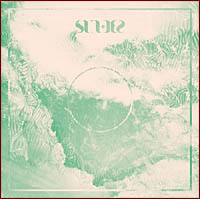
Label : Crusher Records
Sortie du Scud : 30 octobre 2015
Pays : France
Genre : Rock Psychédélique
Type : Album
Playtime : 10 Titres - 36 Mins
Tous les groupes ne sont pas capables d'utiliser les claviers à bon escient. C'est un choix osé, voire un peu casse gueule. Qu'ils soient employés par petites touches subtiles pour souligner un mouvement, ajouter de la profondeur, une certaine douceur, une certaine langueur ou qu'ils soient mis sur le devant de la scène, comme un élément central de la compo. Car il faut bien doser l'apport. Le risque est toujours présent de glisser vers Richard Clayderman plutôt que vers Ray Manzarek. On se doit de faire preuve de discernement et de clairvoyance. Et ça, les lyonnais de SUNDER l'ont parfaitement assimilé. Leur debut album, Sunder est un manifeste à haute densité émotionnelle en faveur de la réhabilitation des claviers dans le Rock psychédélique.
SUNDER est un jeune vieux groupe. C'est le reboot du groupe THE SOCKS. THE SOCKS était un quatuor lyonnais qui a sorti deux EP entre 2011 et 2012. Le gang proposait un bon Stoner honnête et tonitruant, mais sans grande originalité. Début 2014, THE SOCKS sortait son debut album éponyme, un son Rock psychédélique vintage dans la lignée de KADAVAR ou GRAVEYARD. Et un peu plus d'un an et demi plus tard, le même gang change de nom et sort un nouvel album éponyme, toujours dans le genre Rock Revival. Telle la chrysalide devenant papillon, THE SOCKS devient SUNDER. On reprend exactement les mêmes musiciens, soit Julien Méret (Guitare et chant), Jessy Ensenat (baterrie), Vincent Melay (basse) et Nicolas Baud (farfisa, mellotron & background vocals) et on recommence. Sauf qu'en guise de recommencement, SUNDER est une invitation à un voyage dans le temps, confortablement installé sur la banquette arrière d'un minibus Volkswagen en compagnie d'une bande de chevelus en route pour un stage de Sitar dans un ashram de Pondichery.
SUNDER a choisi de mettre en avant les claviers de Nicolas pour créer une ambiance groovy et haut perchée. On ne parle pas de nappes discrètes qui viendraient ponctuer une musique suave et sinueuse ou souligner un break. C'est plutôt l'inverse. Les claviers donnent le ton, comme sur le très beau morceau d'ouverture "Deadly Flowers" dont l'intro est une envolée d'orgues hautement fuzzés. Autre ingrédient de choix, le chant de Julien, on peut dire en toute simplicité que le vocaliste sait chanter et donner vie à son interprétation avec des syllabes traînantes, des variations chromatiques s'ajustant à l'ambiance de chaque morceau, se renouvelant sans cesse. Le timbre de Julien a un petit quelque chose des BEATLES, effet accentué par une voix systématiquement doublée et des back voice omniprésents. La rythmique tout en groove, les percus soyeuses et une production très naturelle, respectueuse de l'intention du projet sont les ultimes ingrédients de cet agréable mélange.
Difficile de croire qu'on a affaire à un debut album. Sunder est un opus mature qui n'a pas ce défaut de jeunesse consistant à recopier sans grande subtilité les morceaux phares des groupes dont on s'inspire. Tout au contraire, le gang a ingurgité et digéré ses influences pour proposer une musique évocatrice, vintage à souhait, mais qui honore sans recopier. A l'écoute du méfait, on pense un petit peu aux BEATLES (notamment sur "Cursed Wolf" et "Lucid Dream"), aux premiers albums de PINK FLOYD mais aussi à tous ces groupes qui ont jalonné les années 60, laissant ici ou là un tube impérissable avant de sombrer dans l'oubli. Ainsi le très mélancolique "Bleeding Tree" et son émouvant solo de guitare final qui sonne comme un chant du cygne.
En dix petits morceaux ne dépassant pas les quatre minutes, les lyonnais démontrent qu'on peut faire du Rock revival sans sombrer dans la caricature. Un sans fautes.
Ajouté : Jeudi 26 Novembre 2015 Chroniqueur : Rivax Score :     Lien en relation: Sunder Website Hits: 7542
|