# Copyright (C) 2002-2004 gregoire HUBERT.
#
# This library is free software; you can redistribute it and/or
# modify it under the terms of the GNU Lesser General Public
# License as published by the Free Software Foundation; either
# version 2.1 of the License, or (at your option) any later version.
#
# This library is distributed in the hope that it will be useful,
# but WITHOUT ANY WARRANTY; without even the implied warranty of
# MERCHANTABILITY or FITNESS FOR A PARTICULAR PURPOSE. See the GNU
# Lesser General Public License for more details.
#
# You should have received a copy of the GNU Lesser General Public
# License along with this library; if not, write to the Free Software
# Foundation, Inc., 59 Temple Place, Suite 330, Boston, MA 02111-1307 USA
#
# Author : gregoire HUBERT
#
# XML_node.objet
#
# This object is an XML node representation
#
# /- name (string)
# xml_node --- attributes (array)
# \- children (array) or value (string)
class xml_node {
var $name;
var $attributes = array();
var $children = array();
var $value = "";
function xml_node($name,$attributes,$children=array(),$value="") {
$this->name = $name;
if (is_array($attributes)) {
$this->attributes = $attributes;
}
$this->children = $children;
$this->value = $value;
}
}
# Copyright (C) 2003-2004 gregoire HUBERT.
#
# This library is free software; you can redistribute it and/or
# modify it under the terms of the GNU Lesser General Public
# License as published by the Free Software Foundation; either
# version 2.1 of the License, or (at your option) any later version.
#
# This library is distributed in the hope that it will be useful,
# but WITHOUT ANY WARRANTY; without even the implied warranty of
# MERCHANTABILITY or FITNESS FOR A PARTICULAR PURPOSE. See the GNU
# Lesser General Public License for more details.
#
# You should have received a copy of the GNU Lesser General Public
# License along with this library; if not, write to the Free Software
# Foundation, Inc., 59 Temple Place, Suite 330, Boston, MA 02111-1307 USA
#
# Author : gregoire HUBERT
#
# xml_tree class
#
# This object parses an XML stream and offers a tree composed by xml_nodes
#
class xml_tree {
var $xml_stream;
var $current_node;
var $root_node;
var $index;
var $value;
function xml_tree() {
$this->root_node = new xml_node("__ROOT_NODE",array());
$this->current_node = $this->root_node;
}
function add_tree($xml_stream) {
# Managing the parser
$this->xml_stream = $xml_stream;
$xml_parser = xml_parser_create();
xml_parser_set_option($xml_parser,XML_OPTION_CASE_FOLDING,0);
xml_parser_set_option($xml_parser,XML_OPTION_SKIP_WHITE,1);
if (!xml_parse_into_struct($xml_parser,$this->xml_stream,$this->value,$this->index)) {
xml_parser_free($xml_parser);
die("XML Parse error");
}
xml_parser_free($xml_parser);
# Now, $this->value and $this->index are informed, we can use the get_node methode.
$tab_result = $this->get_node(0,count($this->value) - 1);
$this->root_node->children[] = $tab_result[0];
$this->current_node = $this->root_node;
}
function get_node($index_start,$index_stop) {
#echo " \n";
#echo "GET-NODE($index_start,$index_stop) \n";
# What we are going to return is an array of xml_nodes
$return_tab = array();
# depth is only here to check if everything is all right
$tab_node = $this->value[$index_start];
$depth = $tab_node["level"]-1;
# Now we have to be sure we do not forget a single node
for ($index = $index_start;$index <= $index_stop;$index++) {
#echo "\$index = $index ";
# get the current node
$tab_node = $this->value[$index];
# what type of node is it ?
switch($tab_node["type"]) {
case "complete" :
# Depth integrity check
if ($tab_node["level"] != $depth+1) {
die("ERREUR # contrainte d'intégrité au noeud complet $index, niveau $depth + 1 au lieu de ".$tab_node["level"]);
}
#echo "Noeud complet trouvé position $index TAG ".$tab_node["tag"]." \n";
# Easy one, no children to manage, only a value...
$return_tab[] = new xml_node($tab_node["tag"],$tab_node["attributes"],"",$tab_node["value"]);
break;
case "open" :
# Depth integrity check
if ($tab_node["level"] != $depth +1 ) {
die("ERREUR # contrainte d'intégrité au noeud ouvert $index, niveau $depth au lieu de ".$tab_node["level"]);
}
# Open tag, we re-use this methode to return its children
# Where is the correspondong close tag ?
$node_index = $this->index[$tab_node["tag"]];
$flipped_node_index = array_flip($node_index);
#echo "This ".$tab_node["tag"]." is at coords ".$flipped_node_index[$index]." ";
$i=1;
do {
$next_index = $node_index[$flipped_node_index[$index] + $i++];
$next_tag=$this->value[$next_index];
}
while ($next_tag["level"]!=$tab_node["level"]);
#echo "Ouverture de noeud détectée pos $index TAG ".$tab_node["tag"]." \n Parcours jusqu au $next_index \n";
# good, we can now instanciate our node
$return_tab[] = new xml_node($tab_node["tag"],$tab_node["attributes"],$this->get_node($index+1,$next_index),"");
# As we called the get_node methode, we are sure that nodes have been parsed to the corresponding close tag
$index = $next_index;
break;
case "close" :
# Depth integrity check
if ($tab_node["level"] != $depth ){
die("ERREUR # contrainte d'intégrité au noeud fermé $index, niveau $depth au lieu de ".$tab_node["level"]);
}
#echo "Fermeture de noeud detectée pos $index TAG ".$tab_node["tag"]."
\n";
# This ugly thing is useless because reaching a close tag means that $index==$index_stop but who knows ? =)
# it will be skipped soon
$index = $index_stop;
break;
default:
die("Erreur de type de TAG non déterminé :'".$tab_node["type"]."'");
}
}
# We are out ... returns the array with collected children...
return ($return_tab);
}
# this function browse the xml tree and set the current node to the selected node
function give_node($path) {
if ($path[0]=="/") {
$current_node=$this->root_node;
$path=substr($path,1);
#echo "ABSOLUTE PATH GIVEN=$path ";
}
else {
$current_node = $this->current_node;
}
#echo "PATH GIVEN=$path ";
$tab_path = split("/",$path);
foreach ($tab_path as $node_expr) {
#echo "STUDYING EXPR='$node_expr' ";
$node = $current_node;
$expr_tab = split("\?",$node_expr);
$node_name = $expr_tab[0];
$attr_tab = 0;
if (count($expr_tab)>1) {
##echo "TROUVE AU MOINS UNE CONDITION SUR LES ATTRIBUTS... ";
$attr_expr_tab=split(",",$expr_tab[1]);
$attr_tab=array();
foreach($attr_expr_tab as $attr_expr) {
$attr_split_expr=split("=",$attr_expr);
$attr_tab[$attr_split_expr[0]]=$attr_split_expr[1];
}
}
$last=0;
foreach ($node->children as $children) {
#echo "COMPARING WITH '$children->name' ";
if ($children->name == $node_name) {
##echo "TROUVE NOEUD CORRESPONDANT $node_name ";
if (is_array($attr_tab)) {
$node_attributes = $children->attributes;
foreach ($attr_tab as $key=>$value) {
if ($node_attributes[$key] == $value) {
#echo "ATTRIBUTE & CHANGE CURRENT NODE TO ".$children->name." ";
$current_node = $children;
$last = 1;
}
}
}
else {
##echo "CHILD=".$children->name." ";
#echo "CHANGE CURRENT NODE TO ".$children->name." ";
$current_node = $children;
$last=1;
}
}
if ($last) {
break;
}
}
if (!$last) {
#echo "PATH ERROR $node_name ";
#die("MMmmmh It seems that this file is not a DIA XML format...sorry...");
return 0;
}
}
return $current_node;
}
function browse_tree($path) {
$node = $this->give_node($path);
if (is_object($node)) {
$this->current_node = $node;
return 1;
}
return 0;
}
# this method dumps an html representation of the xml tree
function xml_show($node = "",$level=0,$last=0) {
if ($node=="") {
$node=$this->root_node;
}
if (!is_object($node)) {
die("ERROR : node is not an object");
}
$line="";
for($i=1;$i<=$level;$i++) {
if ((i==$level-1) and ($last)) {
$line.=" ";
}
else {
$line.=" |";
}
if ($i==$level) {
$line.="`-";
}
}
$line.=$node->name;
#echo $line;
$line.="".count($node->children)."";
if (count($node->children)==1) {
$line.=" (".$node->value.") \n";
echo "$line";
}
else {
$line.=" \n";
echo "$line";
$i=1;
foreach($node->children as $children) {
if ($i==count($node->children)) {
$this->xml_show($children,$level+1,1);
}
else {
$this->xml_show($children,$level+1);
}
$i++;
}
}
}
#END_CLASS
}
DEADLY CARNAGE (it) - Manthe (2014)
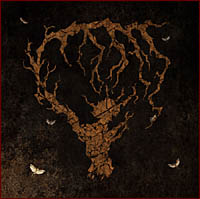
Label : Aeternitas Tenebrarum Musicae Fundamentum
Sortie du Scud : 8 mars 2014
Pays : Italie
Genre : Black / Doom Metal mélodique
Type : Album
Playtime : 7 Titres - 49 Mins
"DEADLY CARNAGE est une créature qui a plusieurs aspects. Si je devais faire une définition, je dirais que notre musique est un croisement entre un Black Metal moderne et du Doom avec des divagations progressives, du moins en ce qui concerne Sentiero II".
Du moins en ce qui concerne Sentiero II.
Qu'il a eu raison de préciser, l'ami Adres. Et pourtant, au moment où les Italiens de DEADLY CARNAGE ont assuré la promotion de leur second album en nos pages, nul ne pouvait deviner que Manthe serait à la fois si proche et si lointain de Sentiero II. Nous en avons maintenant la certitude, et définitivement, qu'il a eu raison de préciser. Car en fait, de Black Metal moderne et de Doom avec des divagations progressives, il n'y en a plus que des ébauches, des esquisses, des fragrances. A ma grande surprise, ce groupe transalpin plutôt destiné à la discrétion de son Black intense mais terriblement underground, a trouvé les ressources pour surpasser l'éclair de génie entraperçu sur "Ceneri" et en faire toute la luminosité de son nouvel opus.
A l'instar du dernier BEHEMOTH ou de SHINING sur un plus long terme, l'expérience artistique vécue sur Manthe est le reflet d'une introspection longue et douloureuse. Si musicalement, DEADLY CARNAGE ne se rapproche pas vraiment des deux précités, dans l'approche spirituelle, ésotérique, romantique de son œuvre, ils peuvent rivaliser. Nous serons tout autant happés par ces réverbérations mystiques, ces lignes mélodiques poignardantes, cette détresse teintée de décadence que par l'aisance avec laquelle ces musiciens semblent avoir écrit leurs morceaux. Composé entre septembre 2011 (juste derrière la sortie de Sentiero II donc) et mai 2013, l'album démarre par le fascinant "Drowned Hope" et son entame relâchée qui annonce l'arrivée proche d'un Black Metal beaucoup plus vicieux et expérimental, emmené par les vocaux inspirés de Marcello. Un peu comme se plait à le faire un Niklas Kvarforth des mauvais jours, ce vocaliste rejette toute forme de norme académique et déploie un chant transcendantal dont l'intensité varie selon le feeling des compositions. "Dome Of The Warders" par exemple, revêt des couleurs plus chaudes, des riffs plus "heureux", comme peuvent paradoxalement en écrire certains groupes de Rock dépressif / DSBM. Le tout est porté vers les cieux par la présence finale d'une flute (tenue par Stefano Galassi) qui va jusqu'à évoquer le caractère épique d'un SUMMONING. Dans un autre registre, le tempo lent et caniculaire de "Beneath Forsaken Skies" couvert des grognements de Marcello fera forcément un peu penser à la mine patibulaire du "Accuser / Opposer" de MARDUK. Chaque piste regorge de détails, d'arrangements, de variations. "Il Ciclo Della Forgia" est l'écho patriotique de "Ceneri" car chantée en italien, "Electric Flood" est l'explosivité d'un Black Metal plus primitif, "Manthe" est la conclusion éponyme de quinze minutes qui en paraissent deux. Tout ça repose sur une musique extrêmement bien écrite, parfaitement exécutée, techniquement au niveau. Mais je répète à qui veut l'entendre que DEADLY CARNAGE a franchi ici une étape spirituelle qui fait l'unique différence d'avec Sentiero II.
Si je devais faire une définition, je dirais que leur musique est un croisement entre un Black Metal moderne et du Doom avec des divagations progressives, du moins en ce qui ne concerne pas Manthe. Manthe est autrement plus complexe, infiniment plus creusé. Manthe jamais ne tombe à l'eau. D'album en album, DEADLY CARNAGE n'en finit pas de surprendre et de se hisser une fois encore parmi les sorties marquantes d'une année. Que de chemin parcouru depuis les errances de Decadenza ! Décadence. Ces Italiens auront évolué en sens inverse.
Ajouté : Mardi 09 Septembre 2014 Chroniqueur : Stef. Score :     Lien en relation: Deadly Carnage Website Hits: 8654
|